
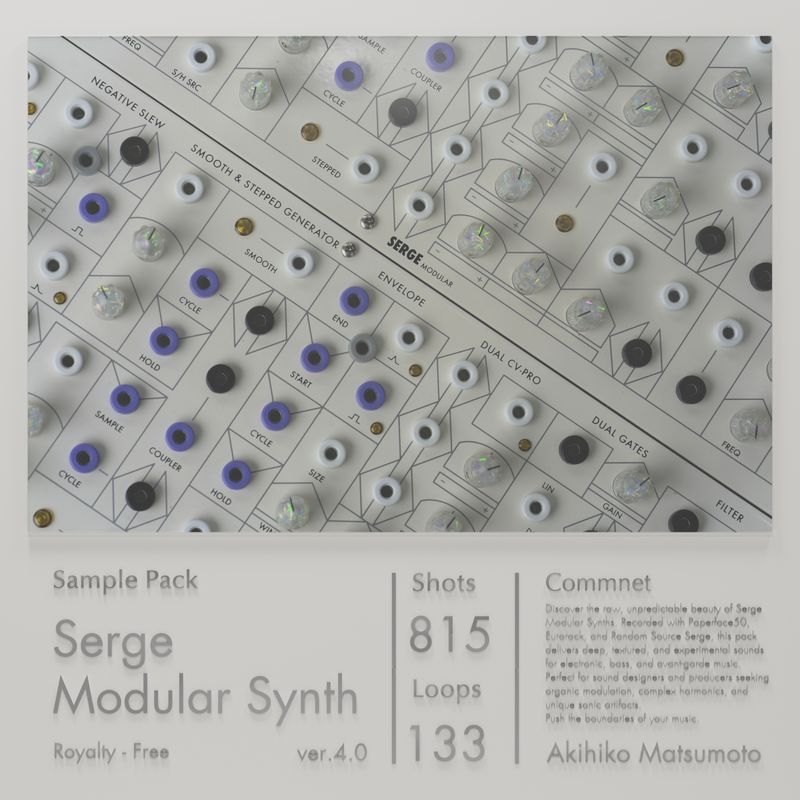
Serge Modular Synth (Sample Pack) ver.4.1
A Study in Nonlinear Voltage

Serge is difficult to reduce to a single signature sound. It was never designed as a synthesizer built around one predetermined signal path. Its identity emerges from relationships between voltages. A slope can become an oscillator, an oscillator can become a control source, feedback can become rhythm, and a filter can become part of a self interacting patch. This sample pack does not try to imitate Serge with a conventional synthesizer. It records those states directly from the hardware as usable audio.
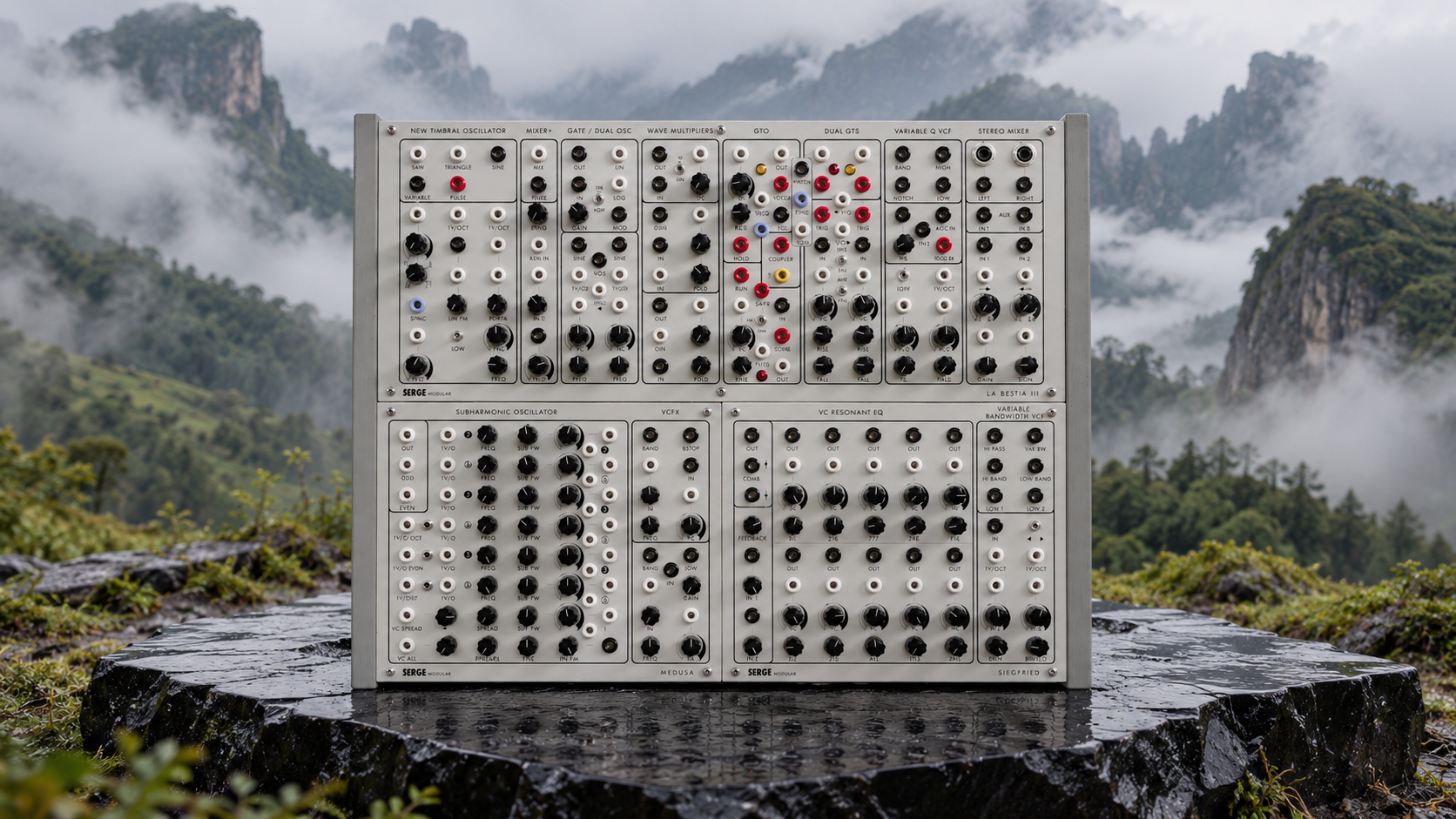
The archive contains material created with GTO, GTS, Resonant EQ, Paperface 50th Anniversary, La Bestia III, Medusa, and Siegfried. It moves from the earliest Serge ideas revisited through Paperface, through La Bestia III where classic circuits meet fifth generation designs, to contemporary instruments such as Medusa and Siegfried. Different generations of Serge are treated as one continuous sonic archive.
The central subject is not the model number of each instrument. It is what happens when feedback, cross modulation, unstable interaction, harmonic drift, resonance, division, waveshaping, and controlled failure become musical material.
Recording the Serge idea rather than one Serge instrument
In Serge, the name of a module does not permanently define its role. A function intended for control voltage can move into the audio range. An audio signal can begin controlling another circuit. A filter or generator can become an oscillator.
For that reason, the instruments in this sample pack are not treated as isolated sound sources. GTO, GTS, Resonant EQ, Paperface 50, La Bestia III, Medusa, and Siegfried have different architectures, but they share the same refusal to keep functions inside fixed categories.
The recordings are the result of putting that idea into practice. Rhythm, pitch, noise, envelope, resonance, and harmonic structure are not always created as separate layers. They can emerge together from the relationships inside the patch.

GTO and GTS. Where control voltage becomes sound
GTO extends the lineage of the Smooth and Stepped Generator into much faster territory, making the boundary between control voltage and audio increasingly ambiguous. Through the characteristic Serge relationship between Smooth, Stepped, and Coupler functions, random movement, periodic structures, FM, noise, rhythm, and oscillation can emerge from the same network.
GTS approaches the same boundary through slope generation. It can function as an envelope, LFO, timing source, oscillator, and signal processor. Very fast rise and fall behavior allows it to move continuously from control rate operation into the audio range.
In material recorded from these two instruments, the usual production sequence of creating a rhythm first and adding timbre afterward begins to break down. Periodicity, pitch, modulation, and timbre can emerge from the same voltage movement, giving even relatively simple loops a complex internal sense of time.
Resonant EQ. Resonating frequency regions instead of simply removing them
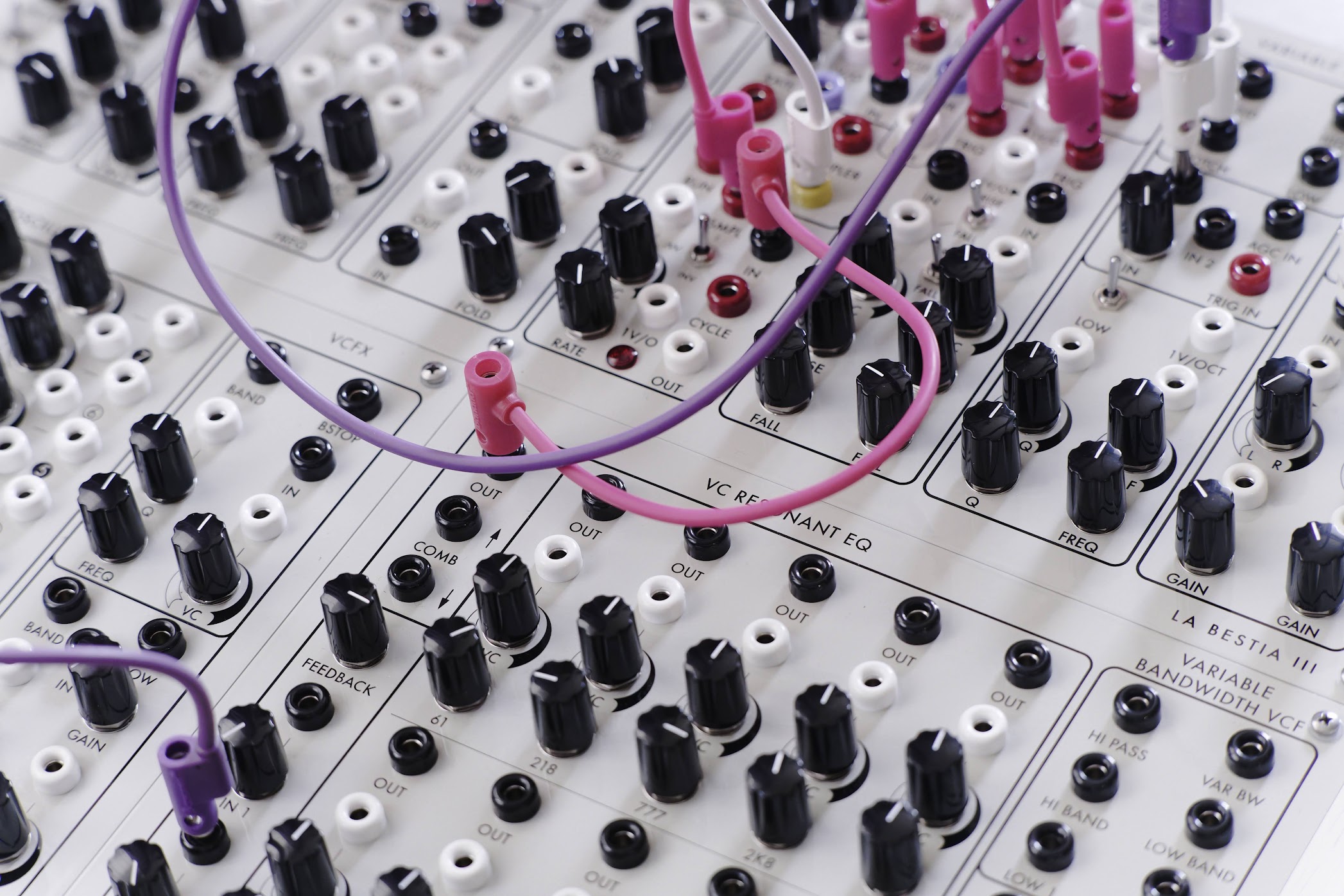
Serge Resonant EQ uses ten frequency bands arranged differently from a conventional graphic equalizer. Each band can move beyond ordinary attenuation and boost into resonant behavior, creating multiple formant like peaks and valleys.
Unlike a filter centered around one moving cutoff frequency, Resonant EQ allows several resonant regions to shape the sound simultaneously. The Random*Source implementation also introduces feedback possibilities, including conventional feedback and inverted feedback that can create cancellation behavior.
Within this archive, Resonant EQ is treated less as a corrective equalizer and more as a circuit for generating timbre. The way an incoming sound is reorganized by several interacting resonant regions is itself part of the Serge language being documented.
Paperface 50. Returning to the earliest Serge
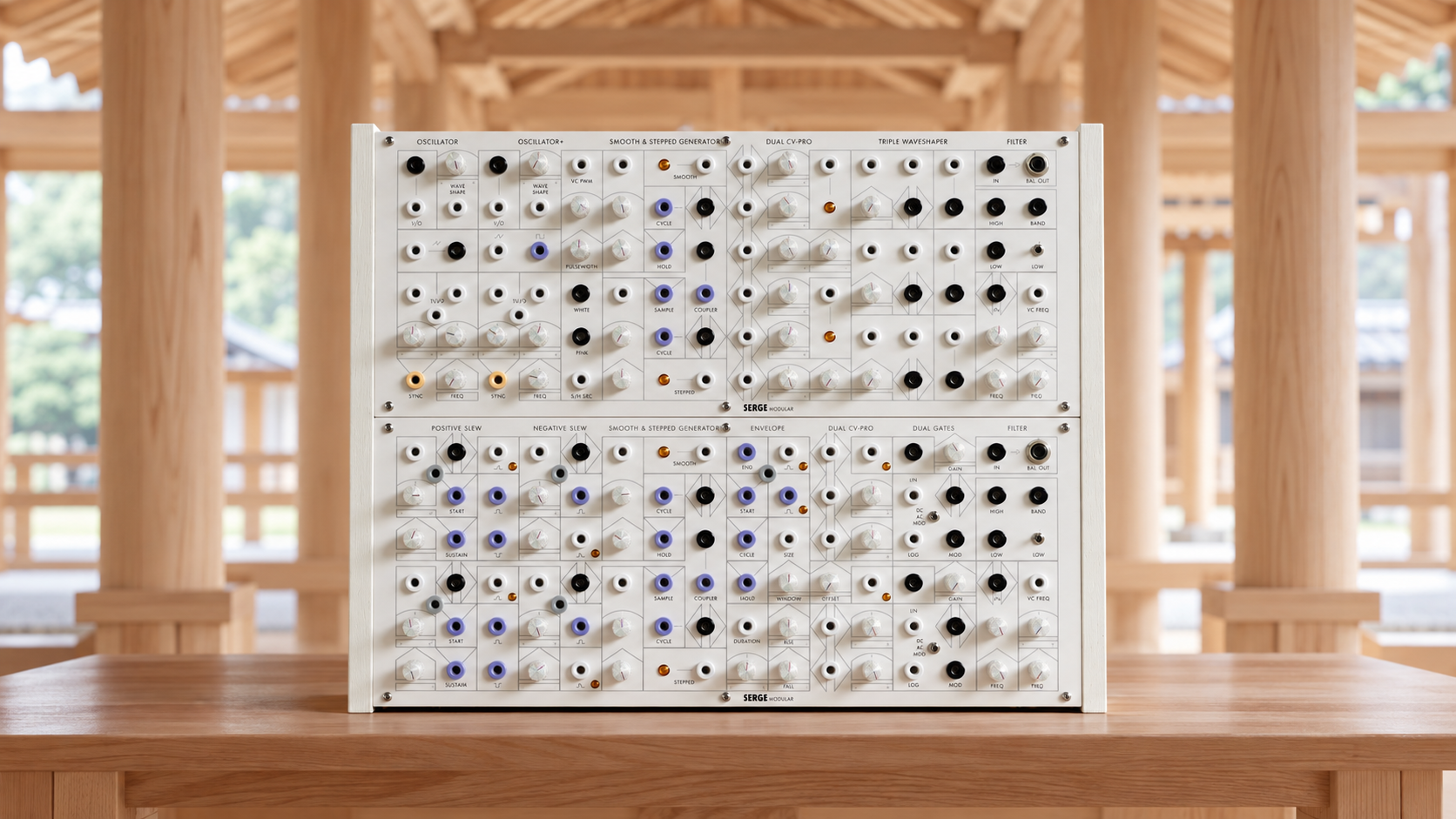
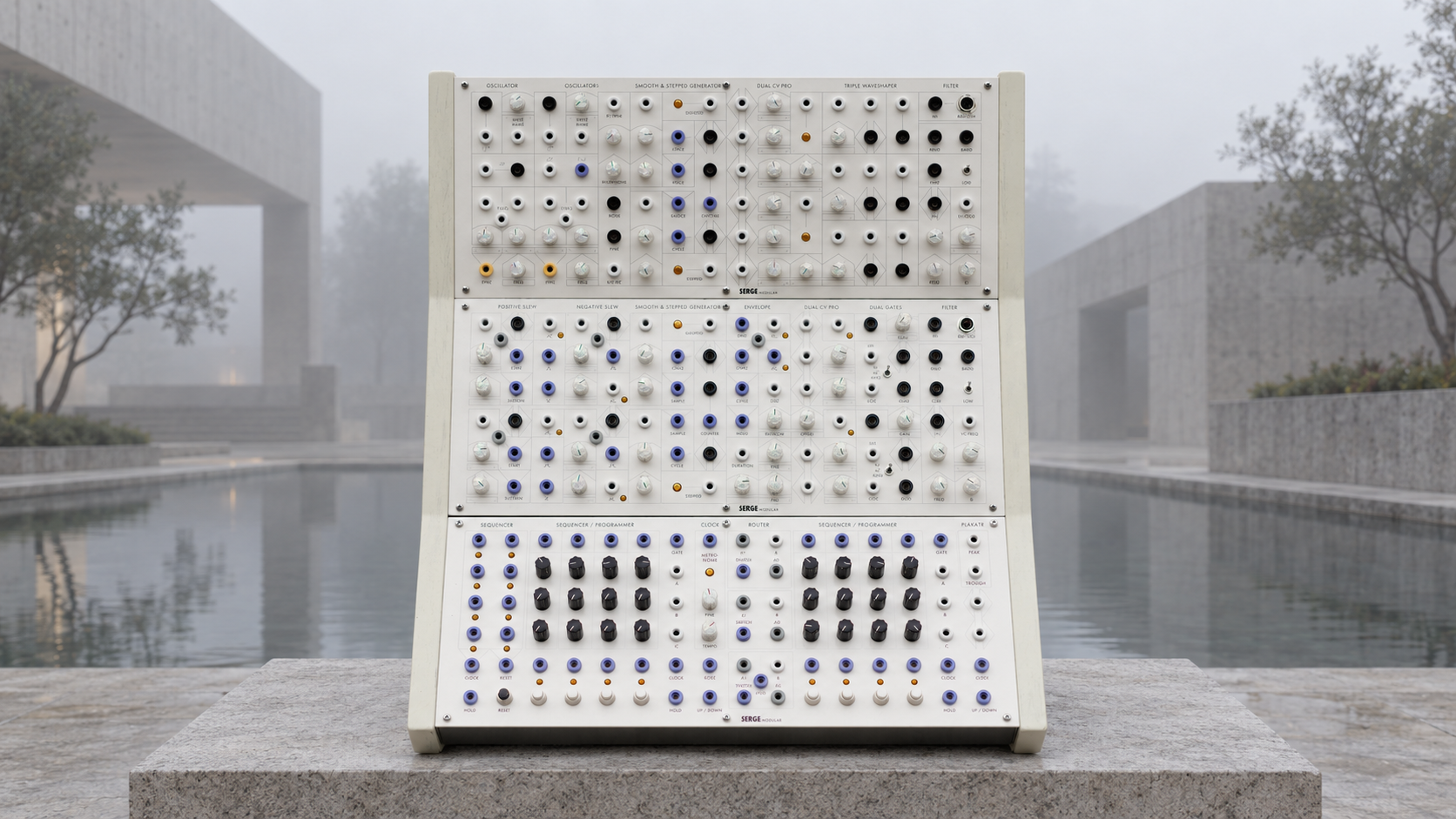
Paperface 50th Anniversary revisits circuits from the earliest Serge systems developed in 1972 and 1973. Serge Tcherepnin returned to those original designs roughly fifty years later while preserving their patch programmable character and adapting them for use as contemporary instruments.
The Paperface material in this sample pack includes one shots, drones, noise structures, bass material, and percussive sounds built around SSG and Coupler relationships. The important point is that these were not approached as dedicated drum modules or bass synthesizers.
The distinctions between modulation source, rhythm generator, oscillator, and processor continually shift inside the patch. What becomes audible is the patch programmable philosophy that was already present in the earliest Serge designs.
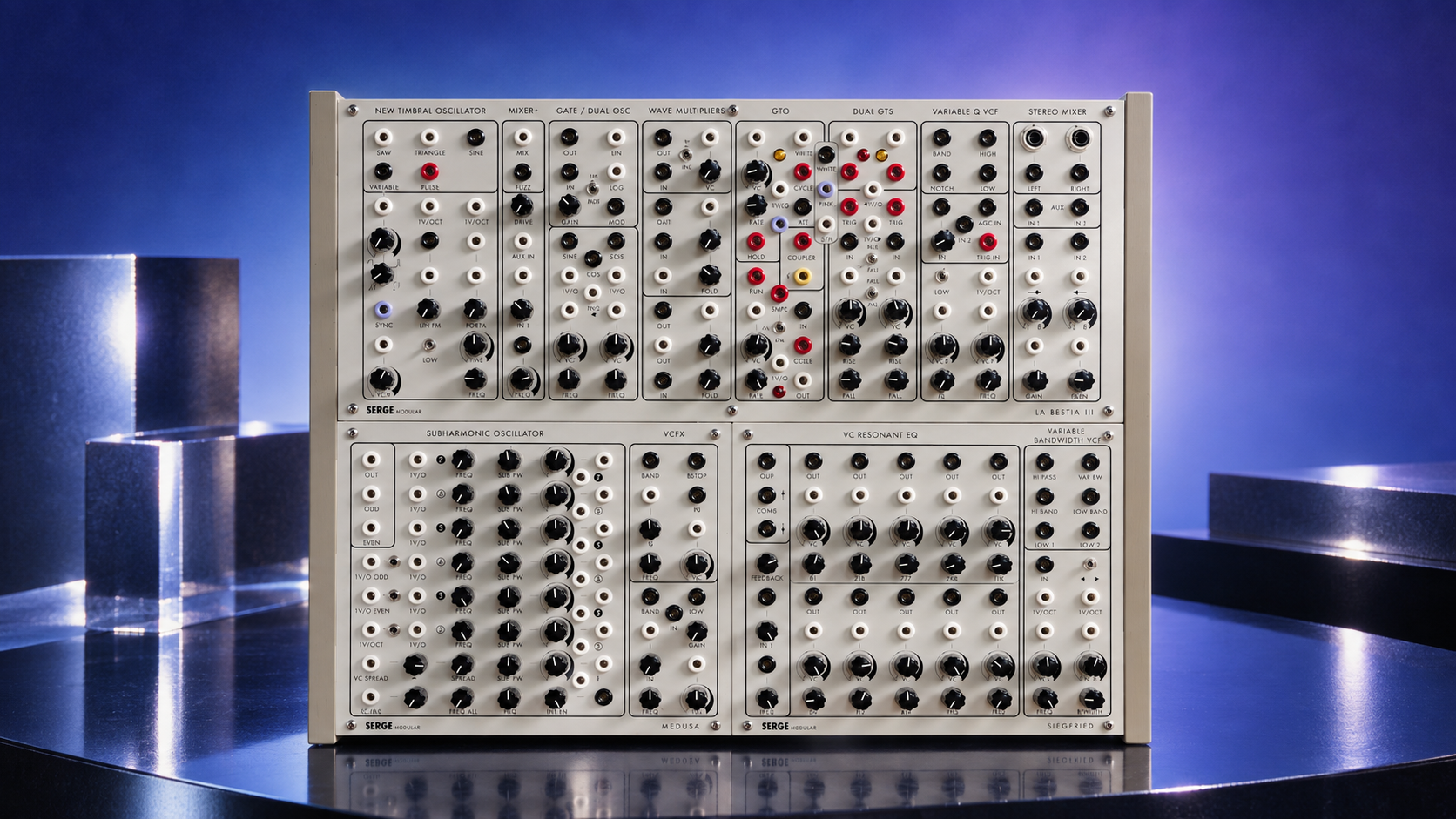
La Bestia III. Connecting generations of Serge inside one Voice Panel
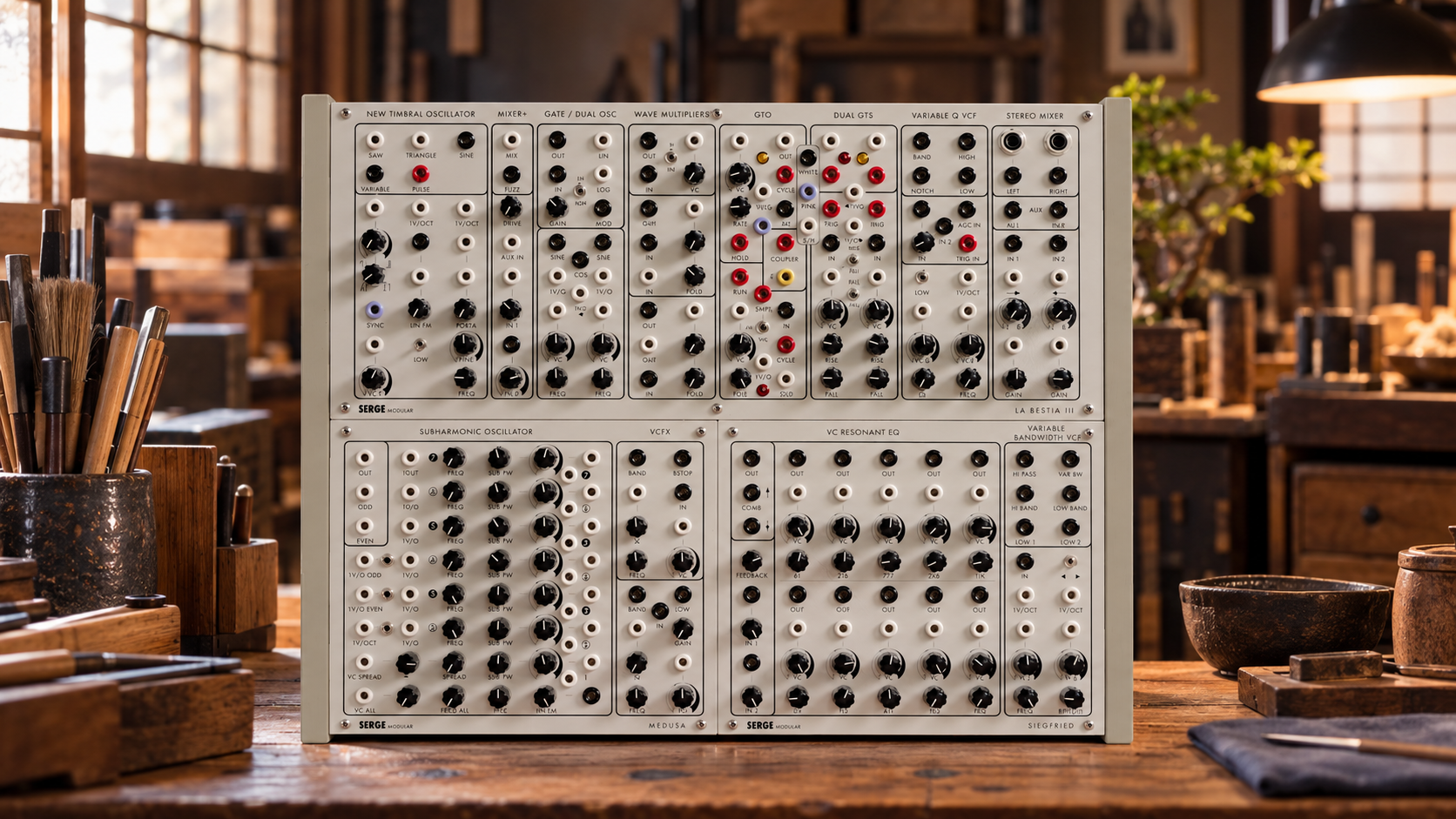
La Bestia III connects classic Serge circuitry with contemporary Serge design inside one instrument. It combines established circuits such as NTO and Wave Multipliers with fifth generation designs including Dual Sine Oscillators, GTO, and GTS.
Mixer and Fuzz, VCFQ, Noise Source, and Stereo Mixer are also integrated into the same Voice Panel. Instead of behaving like one fixed synthesizer voice, the panel can be approached as a system of oscillators, modulation sources, waveshaping, filtering, mixing, and feedback paths. Random*Source describes the configuration as capable of operating with as many as eight oscillators within a single panel.
The importance of La Bestia III in this sample pack is therefore larger than simply adding another instrument to the recording list. The long Serge lineage represented by NTO and Wave Multipliers can interact directly with the faster voltage processing of GTO, GTS, and newer oscillator designs inside the same patch. Older and newer Serge ideas become parts of one continuous instrument rather than separate historical periods.
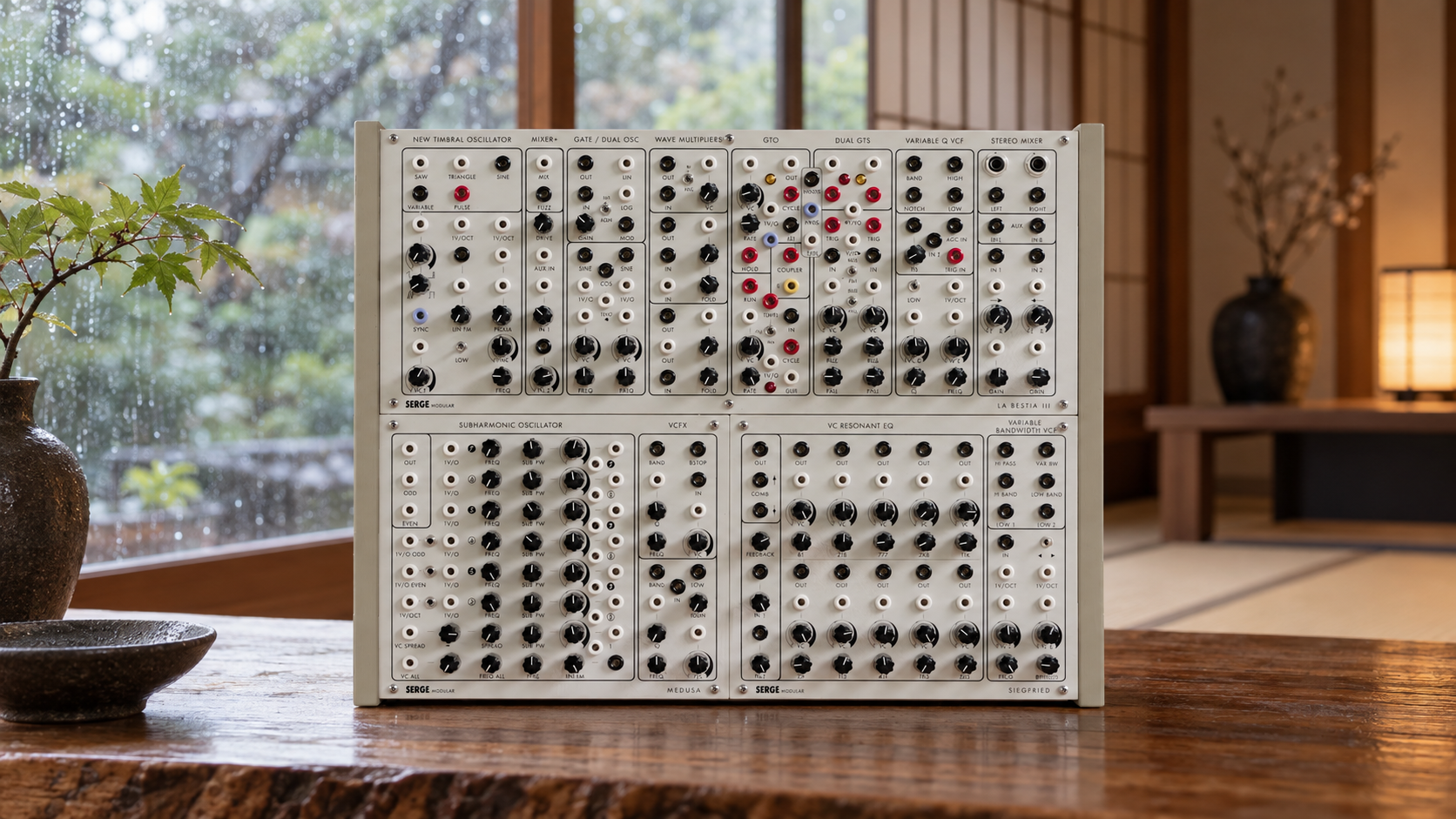
Medusa. Building a new Serge voice from division and clusters
Medusa combines a seven voice Subharmonic Oscillator with two VCFX filters. Its pulse based voices include subharmonic division and pulse width modulation, while pitch control, Spread, and FM allow the structure to move from dense unison relationships into dissonant clusters.
The two VCFX sections following the oscillator are not simply output controls. Their different frequency responses can reshape the divided voices or external signals, producing material that can move from percussive events to slowly changing textures.
If Paperface reconnects the archive with the beginning of Serge, Medusa demonstrates that the same design philosophy can still produce new instruments. This archive places that contemporary Serge voice on the same timeline as the historical circuits rather than treating it as a separate category.
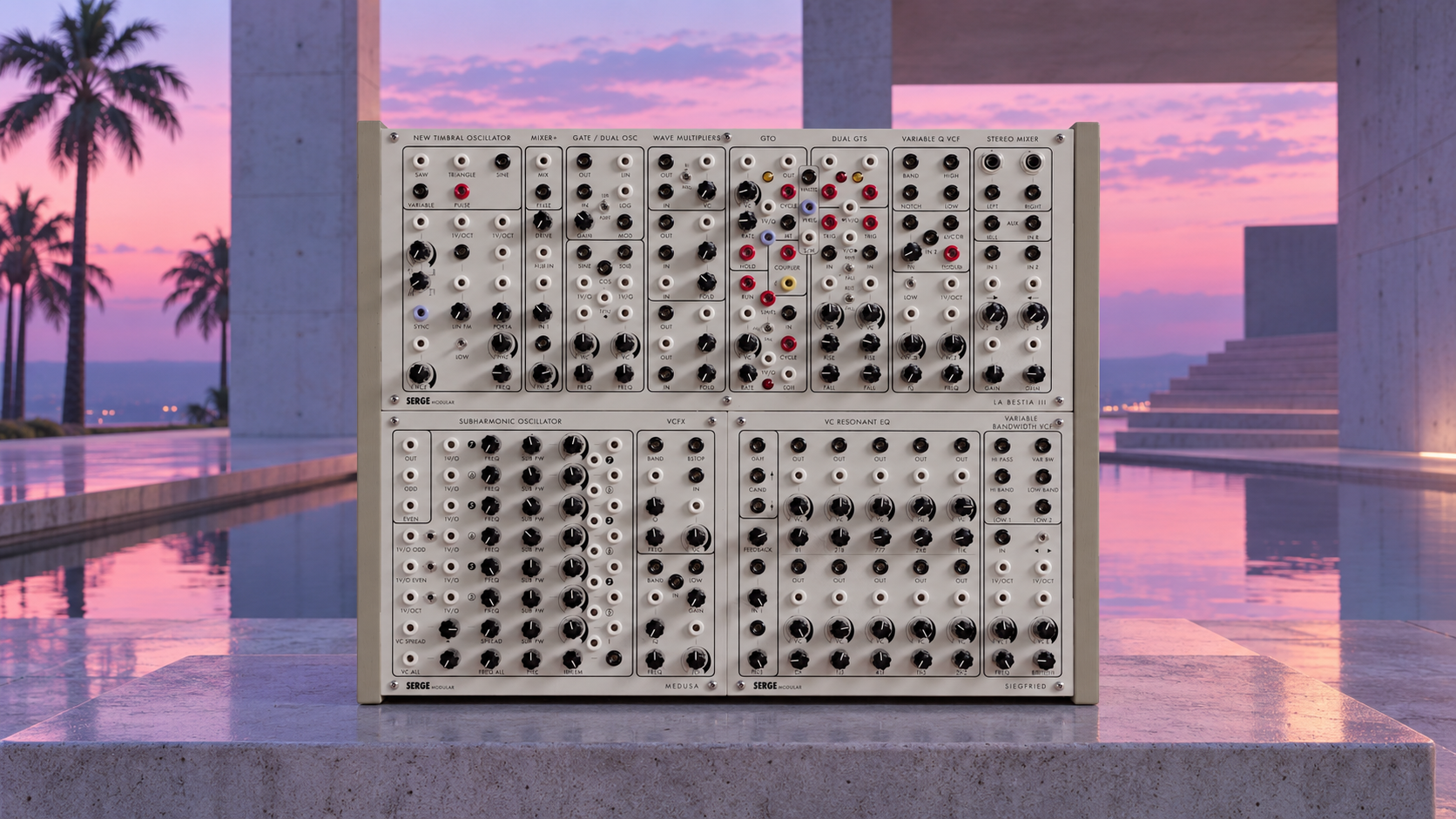
Siegfried. Extending the Resonant EQ idea into voltage control
Siegfried combines the VC Resonant EQ with the Variable Bandwidth Filter in a 4U system.
VC Resonant EQ expands the characteristic ten band Serge Resonant Equalizer by adding voltage control and individual outputs for all ten frequency regions. Those resonant bands are no longer only fixed equalization points. They can be moved independently, extracted individually, sent elsewhere in the patch, and returned as active parts of a larger network.
The Variable Bandwidth Filter is another unusual classic Serge filter architecture, forming its bandwidth through the relationship between two filter sections.
Siegfried therefore pushes the role of Resonant EQ within this archive further. Static spectral shaping develops into a dynamic spectral network where several resonant regions can be modulated and routed back into other parts of the system.
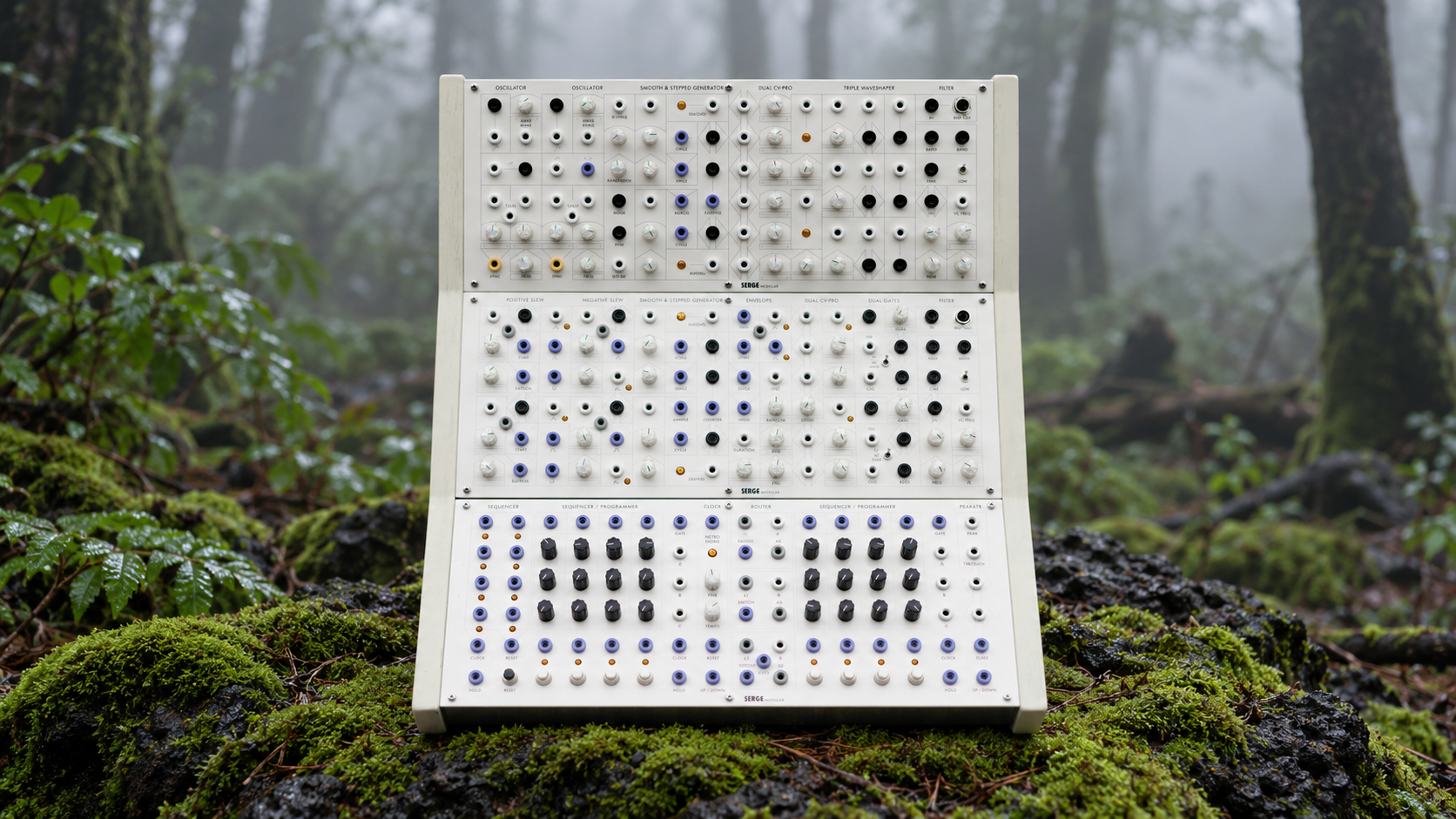
Loops, one shots, and drones as records of system behavior
The library contains loops, one shots, and drones, but those labels describe convenient formats for working inside a DAW rather than the actual identity of the sounds.
Some recordings are stable enough to become the rhythmic foundation of a track immediately. Others allow pitch to drift through feedback, build dense spectra through FM and AM, let divided voices interfere with one another, or allow several resonances to continually rebalance themselves.
The voltage movement of GTO and GTS, the resonant structures of Resonant EQ and Siegfried, the early circuits of Paperface, the generation spanning patch architecture of La Bestia III, and the subharmonic structures of Medusa all produce different results. What connects them is that the relationships inside the patch are being recorded as sound.
Treating texture itself as compositional material
The material is particularly suited to wave, experimental bass, dark ambient, contemporary noise, leftfield electronic music, and other forms of production where timbre carries as much structural weight as melody or harmony.
A loop can become the rhythmic skeleton of a track. A one shot can be repitched into a new instrument. A drone can be fragmented and rebuilt through granular processing, spectral techniques, or resampling.
The value of the archive is not that every sound is immediately polite or predictable. Serge becomes most interesting when what is happening can no longer be described adequately as a simple oscillator, filter, or effects chain.
This pack preserves those moments as audio, allowing the behavior created by physical circuitry and patch relationships to be reorganized inside a DAW without removing the character of the system that produced it.
The Serge method from the earliest circuits to the present
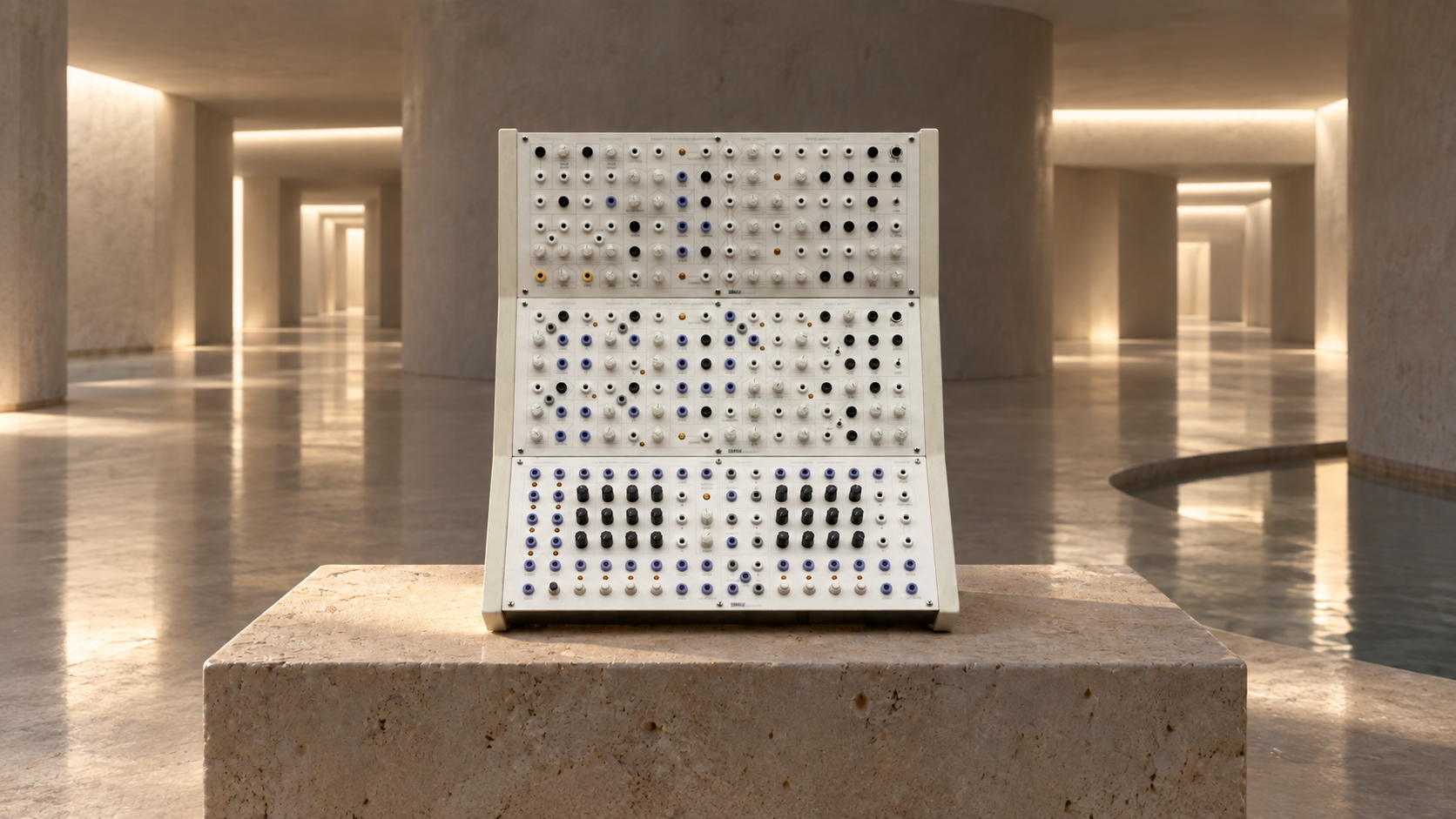
Paperface 50 connects directly to the earliest Serge designs. GTO and GTS extend control functions into timing and audio range behavior. Resonant EQ treats several resonant regions as one spectral structure.
La Bestia III connects classic circuits such as NTO and Wave Multipliers with fifth generation designs including Dual Sine, GTO, and GTS inside one Voice Panel. Medusa creates a new voice from subharmonic structures. Siegfried develops the Resonant EQ concept into a voltage controlled spectral network.
The generations and circuits are different, but the underlying method remains connected. Voltages are placed into relationships, functional boundaries remain open, and sound emerges from the complete patch through feedback, modulation, resonance, and interaction.
Serge Modular Synth Sample Pack is not simply a collection of analog sounds carrying the Serge name. It is an archive of what becomes audible when the Serge method is executed across different generations of real hardware.
An archive that continues to expand
Serge Modular Synth Sample Pack is designed as a continuing record of the Serge system rather than a closed snapshot.
Paperface 50, GTO, GTS, Resonant EQ, La Bestia III, Medusa, and Siegfried represent the systems currently documented in the archive. When new material is published in the future, it can continue the same Serge archive rather than beginning again as a separate collection.
Your purchase includes free lifetime updates. Future published updates are included at no additional cost, and existing customers can access the latest available files through the Sellfy account used for the original purchase. This does not imply a fixed publication schedule or guarantee that updates will appear at any particular interval. When new material is released, it becomes part of the same growing archive.
Video and Patch Process
Watch the patch process and hardware in action:
https://www.youtube.com/playlist?list=PLmPV63fJU3dwwrA0GVWxfgF-pgaBcaoKW
ver.4.0 ... Added 594 Medusa & Siegfried Oneshots. (2026/7/7)
ver. 3.5 ... Added 4 Medusa & Siegfried Drones. (2026/6/29)
ver.3.0 ... Added Serge Paperface 50 SSG Coupler Oneshots. (2026/2/15)
ver.2.6 ... Added 68 FM Bass Loops, 7 FM Bass Oneshots. (6/25/2025)
ver.2.5 ... Added 25 Serge Paperface 808 Oneshots. (6/5/2025)
ver.2.4 ... Added 3 Coupler Beats. (4/15/2025)
ver.2.3 ... Added 4 SSG Coupler long loops. (4/7/2025)
ver.2.2 ... Added 13 Paperface drones & 6 noise drones. (4/6/2025)
ver.2.1 ... Added 16 Paperface oneshots. (4/2/2025)
ver.2.0 ... Added 58 Bass loops, 8 SSG drones. (3/12/2025)
ver.1.5 ... Added 18 Atonal drones. (3/10/2025)
ver.0.3 ... Added 3 GTO Coupler Pulse Noise Loops. (1/12/2025)
ver.0.1 ... Beta released. (12/27/2024)
Buchla Modular Synth (Sample Pack) https://akihikomatsumoto.sellfy.store/p/buchla-modular-synth-sample-pack/
Ciat Lonbarde Modular Synth (Sample Pack) https://akihikomatsumoto.sellfy.store/p/ciat-lonbarde-modular-synth-sample-pack/
Make Noise Modular Synth (Sample Pack) https://akihikomatsumoto.sellfy.store/p/make-noise-modular-synth-sample-pack/
Serge Modular Synth (Sample Pack) https://akihikomatsumoto.sellfy.store/p/serge-modular-synth-sample-pack/
Verbos Modular Synth (Sample Pack) https://akihikomatsumoto.sellfy.store/p/verbos-modular-synth-sample-pack/
Benjolin Modular Synth (Sample Pack)
https://akihikomatsumoto.sellfy.store/p/benjolin-modular-synth-sample-pack/
Morphagene (Reels Pack)
https://akihikomatsumoto.sellfy.store/p/morphagene-reels-sample-pack/
Akihiko Matsumoto
Study Site https://akihikomatsumoto.com/study/
Ableton M4L, Serum Preset Store https://akihikomatsumoto.com/download/
Sample Pack https://akihikomatsumoto.sellfy.store/sample-pack/
Bandcamp https://akihikomatsumoto.bandcamp.com
Ableton Skin https://akihikomatsumoto.sellfy.store/p/ableton-skin-pack/
Spotify https://open.spotify.com/artist/1tZMmxzZbvNu6klyKXa0L1?si=2JZaFeLbREi-UownD8POSg