
$24.99+
Ableton Deep PlateVerb v.2.0 Max for Live Device (.amxd file) | Physical Modeling Plate Reverb
The Physics of Space Reshaping the Culture of Plate Reverberation
A plate reverb becomes more useful when it feels like something you can touch.
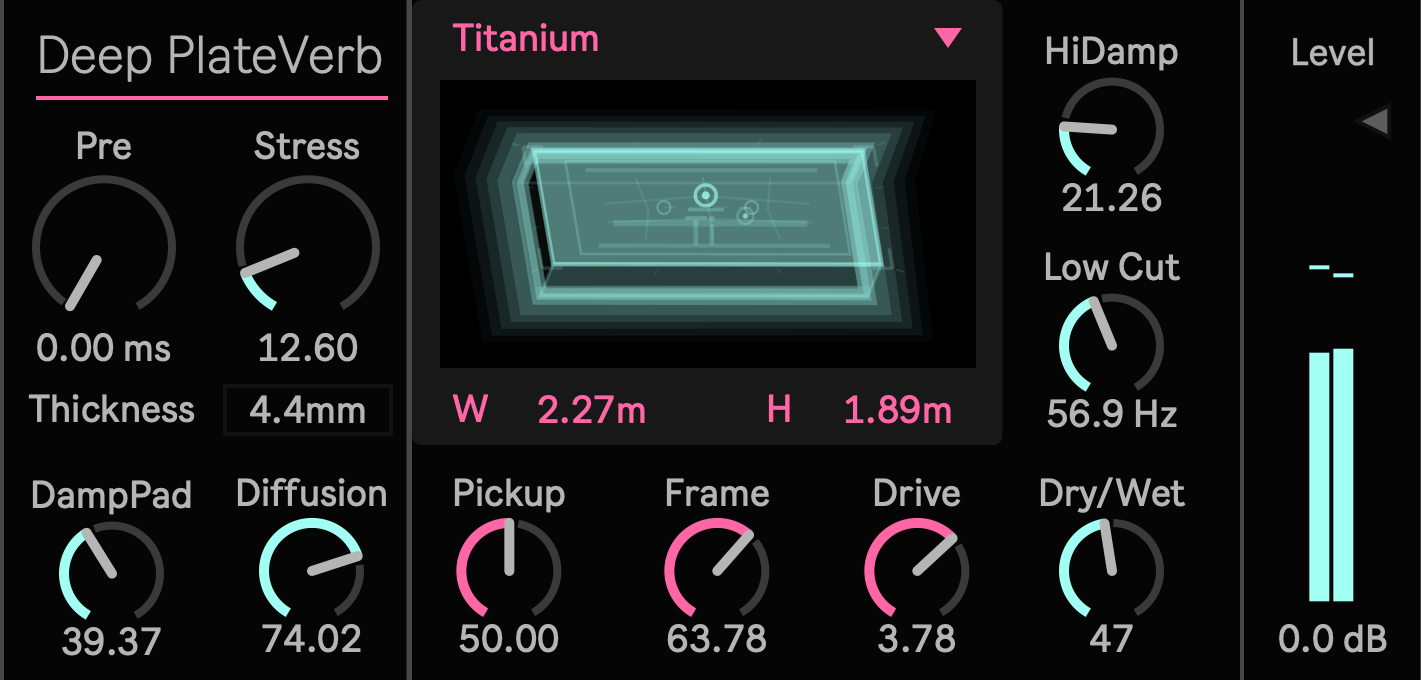
Deep PlateVerb is built around that idea. Instead of giving you a generic room size and a simple decay control, it lets you shape a virtual plate as a physical object. Choose the material. Stretch the width. Change the height. Thicken the plate. Move the pickup point. Press the plate down. Tighten the frame. Let the sound bloom, shorten, brighten, darken, or settle into a more controlled surface.
The result is a clean plate reverb that can stay musical while still feeling designed, tactile, and alive inside an Ableton session.
A Plate With Material, Size, and Tension
Deep PlateVerb does not treat a plate as one fixed sound.
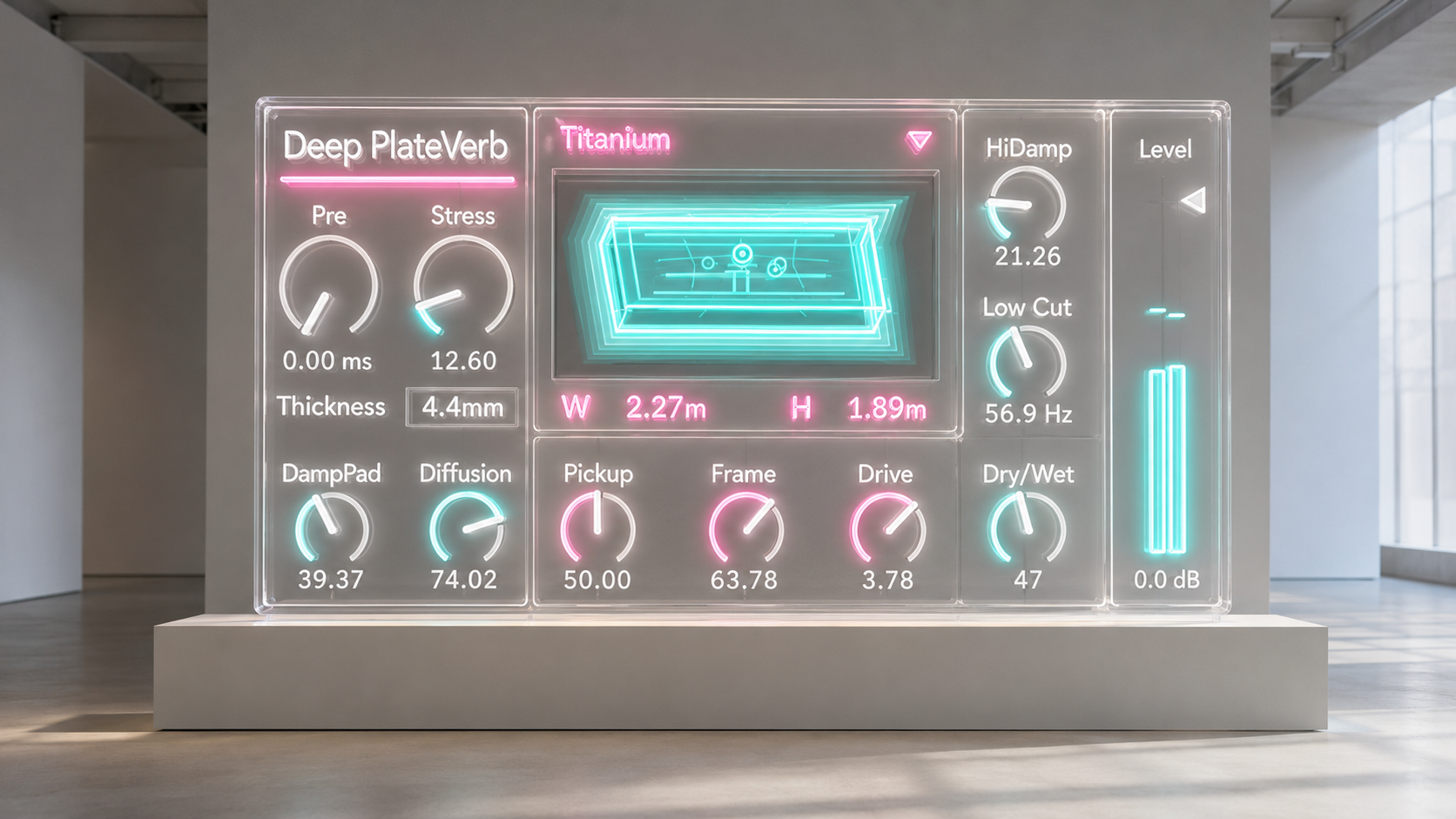
A narrow plate can sit closer to the center. A wider plate can open the wet signal outward. A taller plate can give the tail more length and depth. A thin plate can ring more freely. A thicker plate can become shorter, darker, and heavier.
Material changes the character further. Steel gives the reference plate tone. Aluminum can feel brighter and more extended. Glass can become harder and more narrow. Plywood and Rubber move the device into shorter, duller, more damped spaces. These choices are not presented as decorative labels. They change the way the reverb behaves, so the sound feels connected to the imagined object.
Deep PlateVerb is for producers who want to make a plate feel chosen, not loaded.
Controls That Feel Like Physical Decisions
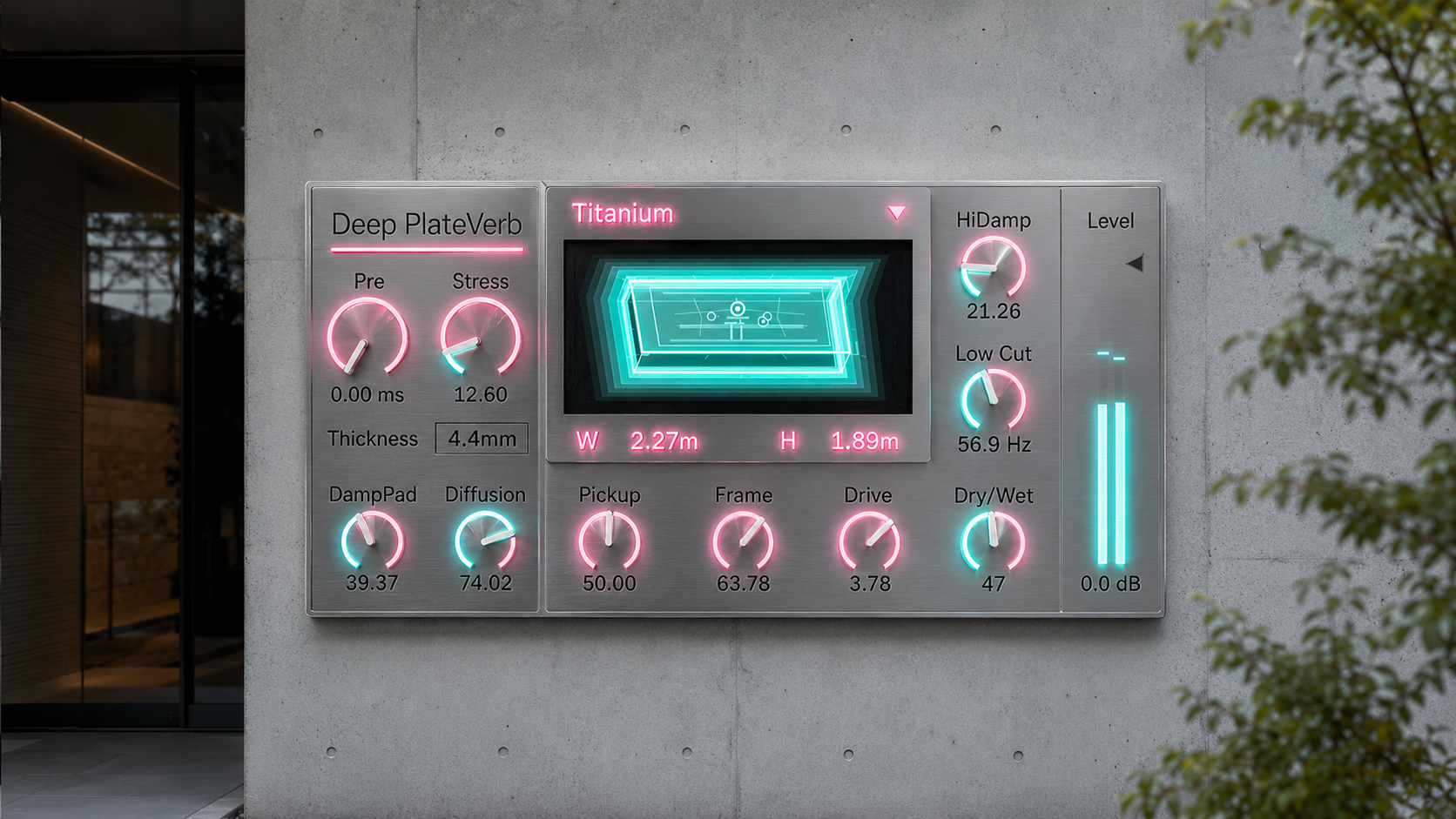
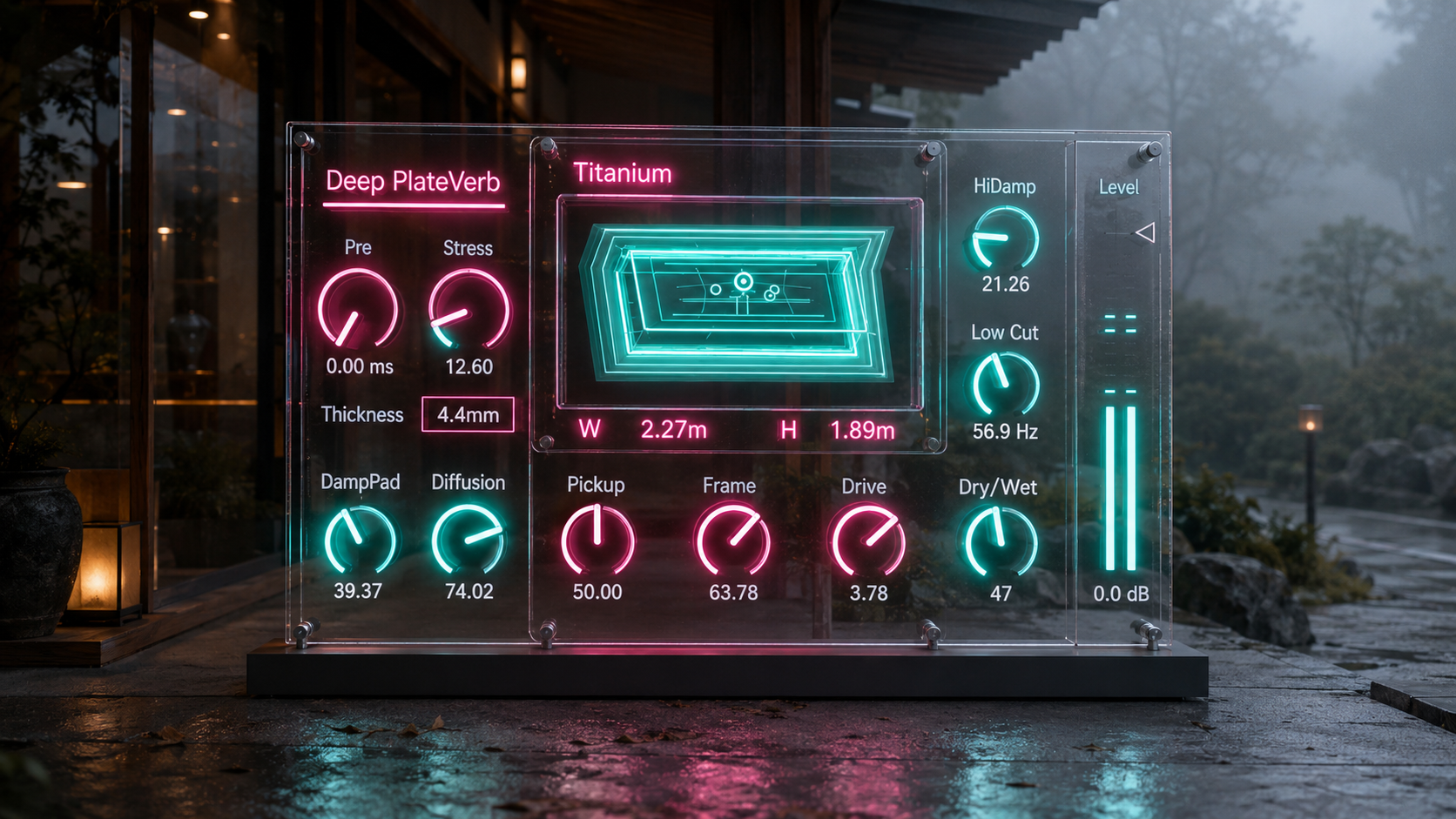
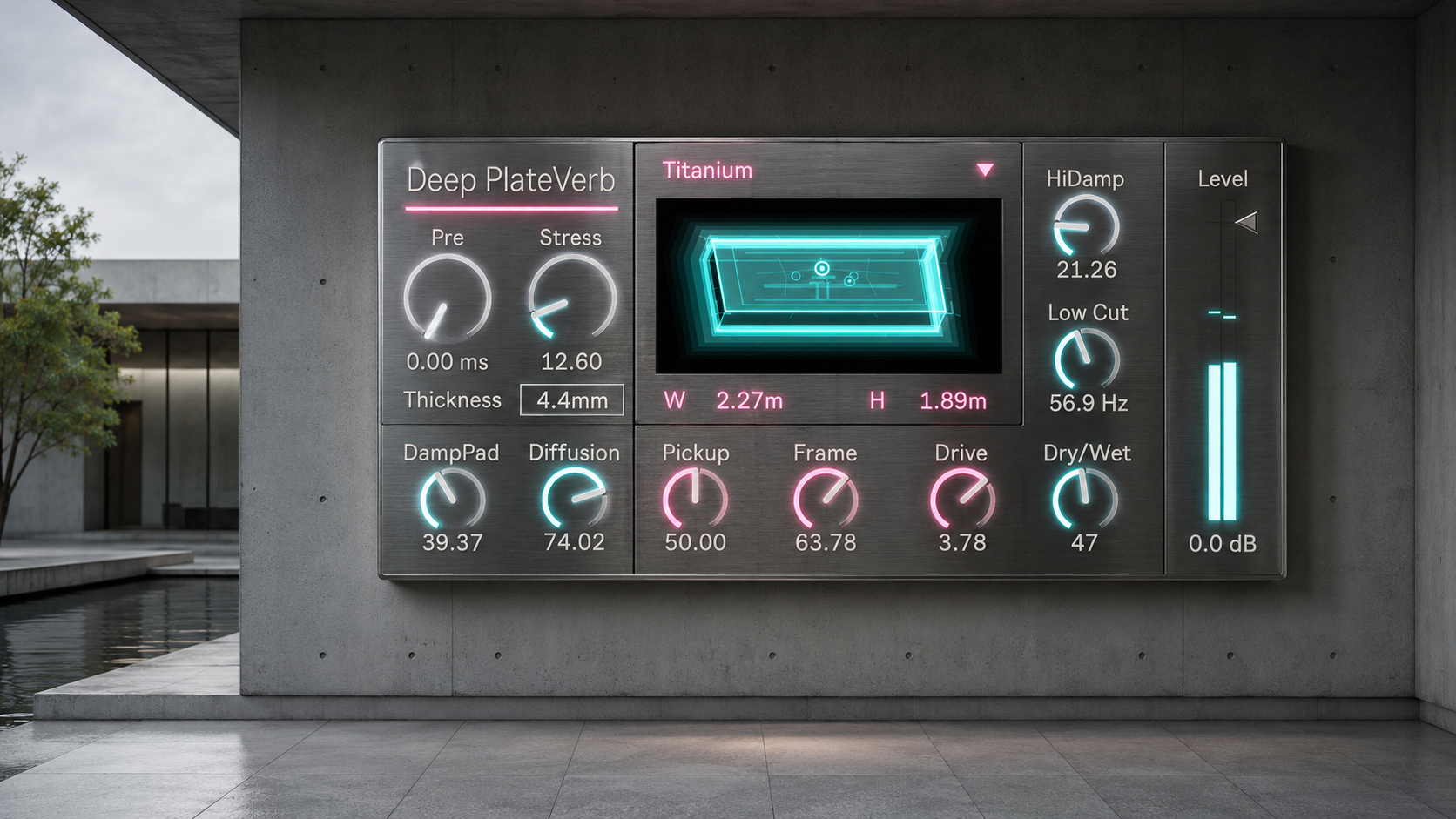
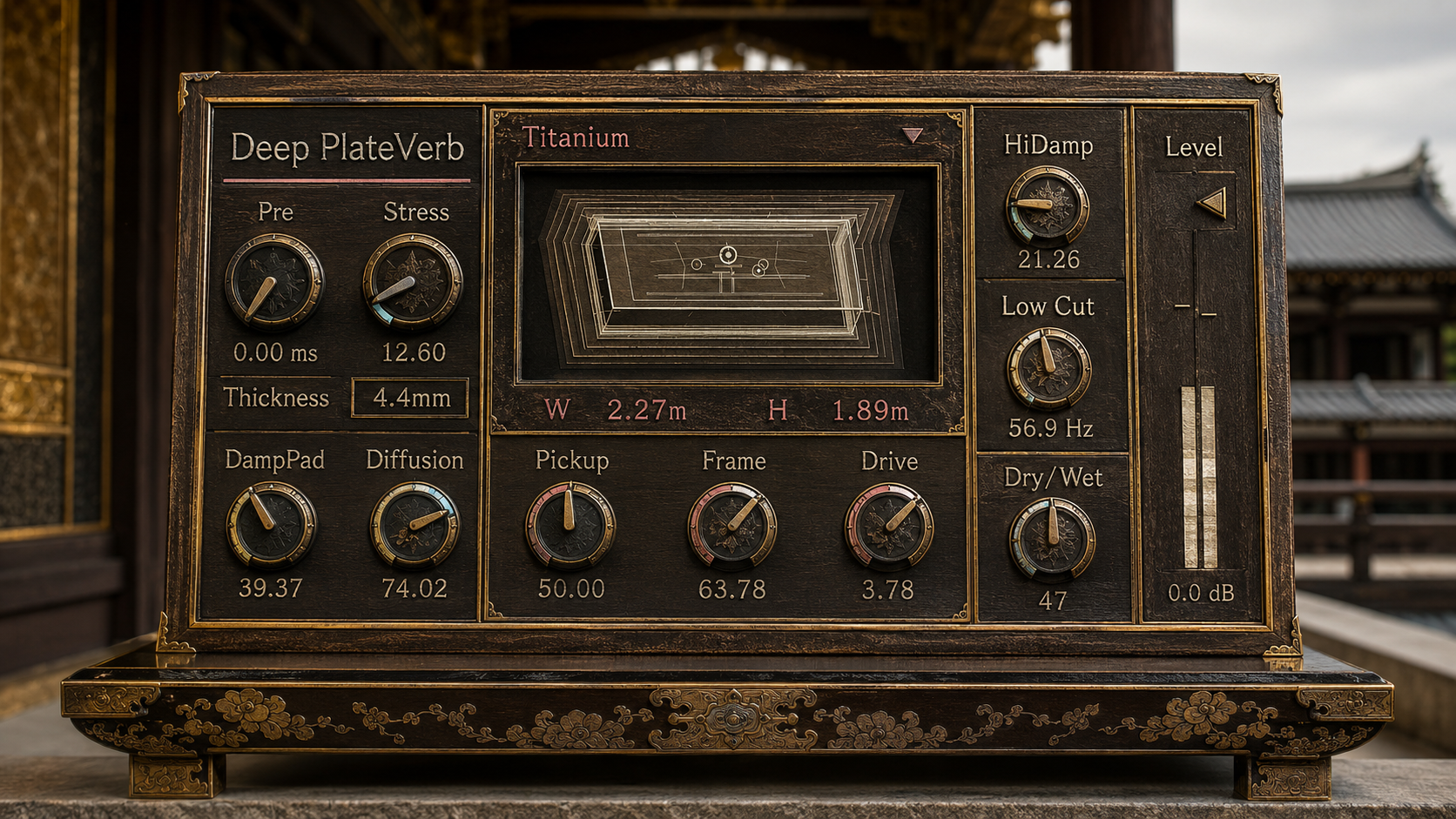
W controls the plate width. Use it when the reverb needs to open across the stereo image, or when the tail should stay more centered and contained.
H changes the vertical scale of the plate. It is useful when you want more length without simply making the whole sound wider.
T changes the thickness. Thin settings keep the plate responsive and ringing. Thicker settings make the sound shorter, darker, and more resistant.
Material chooses the object itself. Steel, Aluminum, Titanium, Copper, Dub, Glass, CarbonFiber, Acrylic, Plywood, and Rubber each push the tail toward a different density, brightness, loss, and movement.
Pickup changes where the plate is read. Center positions feel thicker and smoother. Edge positions can bring out a brighter and more defined presence.
DampPad acts like contact with the plate. Raise it when the reverb needs to stop sooner, sink into the source, or lose excess brightness without simply filtering the whole sound.
Frame gives the boundary more character. It can add low and low mid support, a firmer edge, and the sense that the plate is held inside a physical structure.
Stress tightens the plate. It is not a distortion control. It changes the sense of tension, tail behavior, presence, and movement.
Diffusion decides how the input spreads into the plate. Low settings keep more attack shape. Higher settings turn the entrance into a smoother and denser surface.
Clean, Wide, and Controlled
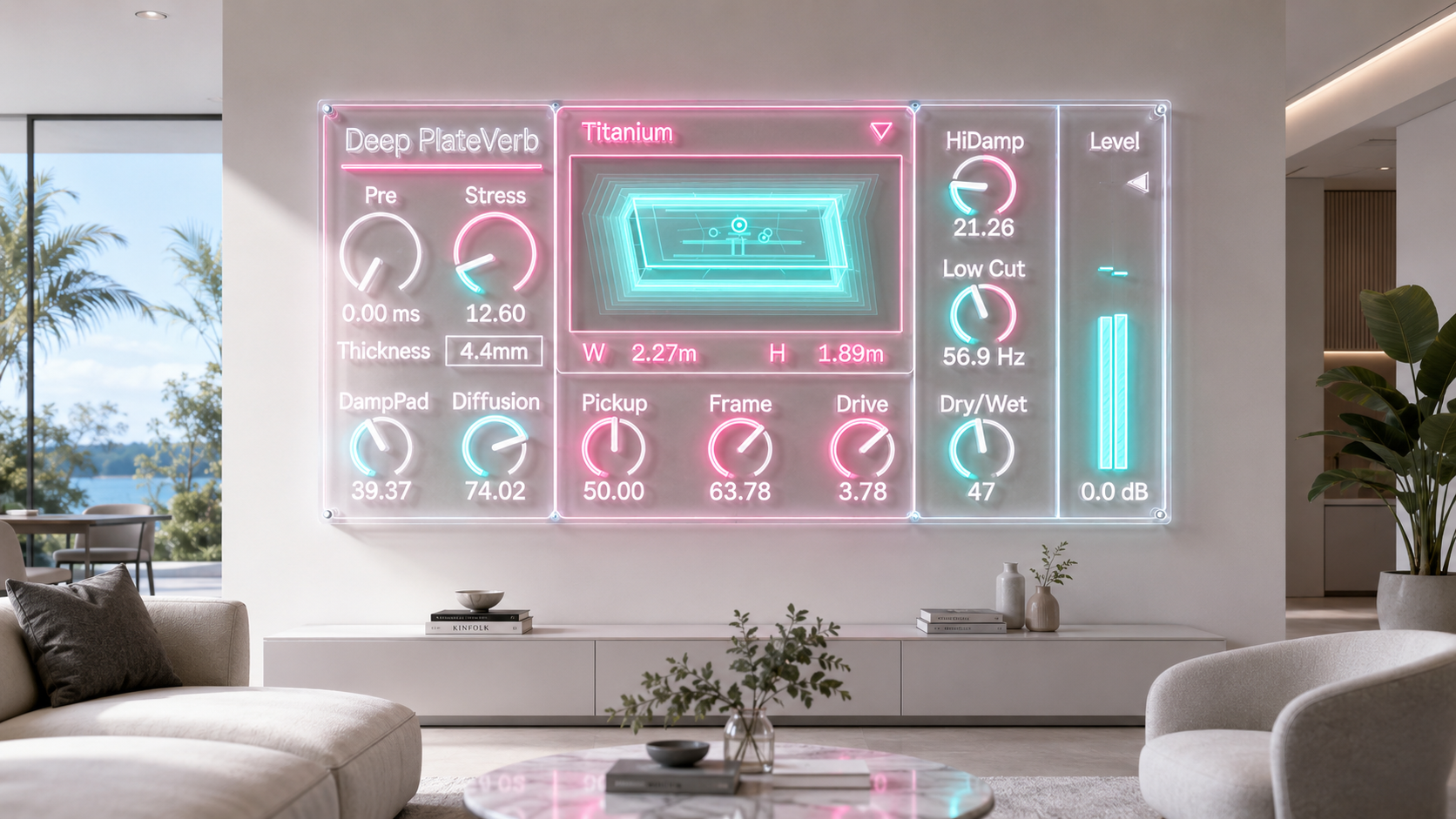
The default sound opens as a clean Steel plate with a wide feel, moderate diffusion, a clear frame, and a controlled dry/wet balance. It is not designed as an aggressive distortion reverb. It starts from a polished plate sound, then lets the user move toward brighter, darker, shorter, wider, narrower, harder, or more muted behavior.
This makes Deep PlateVerb useful on sounds that need space without losing their production role. A synth can gain a shining tail without becoming vague. A snare can pick up plate energy without becoming washed out. A vocal fragment can sit in a controlled metallic field. A noise texture can turn into a physical surface rather than a standard ambience.
The device is especially effective when the question is not only how much reverb should I add, but what kind of plate should this sound be touching.
For Electronic Music and Detailed Sound Design
Deep PlateVerb fits naturally in Ableton projects where reverb is part of composition, not only mix placement.
Use it on return channels when several sounds need to share one plate character. Put it directly on a synth, percussion hit, vocal cut, drone, or texture when the plate should become part of the instrument. Push Material and Pickup for a more audible color.
Adjust W and H when the space needs to change shape. Use DampPad, T, and HiDamp when the tail becomes too long or too bright. Add Frame and Stress when the sound needs more structure and tension.
It can behave like a clean production plate, but it can also become a more unusual resonant object. That range is the point. Deep PlateVerb is less about selecting a room and more about deciding what kind of plate your sound is allowed to excite.
Technical Confidence Without a Manual
Behind the interface, Deep PlateVerb uses a plate based design with multiple diffusion stages, two interacting plate tank paths, pickup reading behavior, material dependent tone and decay response, frame coloration, stress behavior, and equal power dry/wet mixing.
The important part for the user is simple: the controls are connected to audible plate behavior. Width affects stereo spread. Thickness affects how easily the plate rings. Material affects brightness, loss, movement, and presence. Pickup changes the reading position. DampPad shortens and darkens the response. Stress tightens the tail. Frame gives the boundary more weight and edge.
The technical structure is there to make the controls feel coherent in use, not to make the page read like documentation.
Availability and Licensing
Deep PlateVerb is supplied as an Ableton Max for Live device in .amxd format.
Existing customers can access the latest version by logging in with the Sellfy account used for the original purchase. Updates are available at no additional cost.
v.2.0 ... Improved overall physics modeling fidelity. (2026/7/2)
v.1.1 ... Improved overall physics modeling fidelity. (2026/5/26)
Reverb
AethelVerb https://akihikomatsumoto.sellfy.store/p/ableton-aethelverb/
HardVerb https://akihikomatsumoto.sellfy.store/p/ableton-hardverb/
Reverse Verb https://akihikomatsumoto.sellfy.store/p/ableton-reverse-verb/
Preset Verb https://akihikomatsumoto.sellfy.store/p/ableton-reverse-verb/
Shoegazer Reverse Gate https://akihikomatsumoto.sellfy.store/p/abletonshoegazerreversegate/
HardVerb https://akihikomatsumoto.sellfy.store/p/ableton-hardverb/
Deep PlateVerb https://akihikomatsumoto.sellfy.store/p/ableton-deep-plateverb/
Deep SpringVerb https://akihikomatsumoto.sellfy.store/p/ableton-deep-springverb/
Feedback Verb https://akihikomatsumoto.sellfy.store/p/ableton-feedback-verb/
GravityVerb https://akihikomatsumoto.sellfy.store/p/ableton-gravityverb/
REcho https://akihikomatsumoto.sellfy.store/p/abletonrecho
Akihiko Matsumoto
Study Site https://akihikomatsumoto.com/study/
Ableton M4L, Serum Preset Store https://akihikomatsumoto.com/download/
Sample Pack https://akihikomatsumoto.sellfy.store/sample-pack/
Bandcamp https://akihikomatsumoto.bandcamp.com
Ableton Skin https://akihikomatsumoto.sellfy.store/p/ableton-skin-pack/
Spotify https://open.spotify.com/artist/1tZMmxzZbvNu6klyKXa0L1?si=2JZaFeLbREi-UownD8POSg