
$9.99+
Ableton Wave Folder ver.5.5
Max for Live Device (amxd) | Shape the waveform before you reach for another filter
A sound can already have the right pitch, rhythm, and envelope and still feel too simple inside. Filtering can remove or emphasize parts of the spectrum, but it does not necessarily change the underlying shape that created those harmonics. Wave Folder approaches that problem from the waveform itself. It bends the signal back through nonlinear thresholds so a relatively simple tone can develop a denser internal structure, stronger harmonic motion, and a more animated response without changing the musical notes that were played.
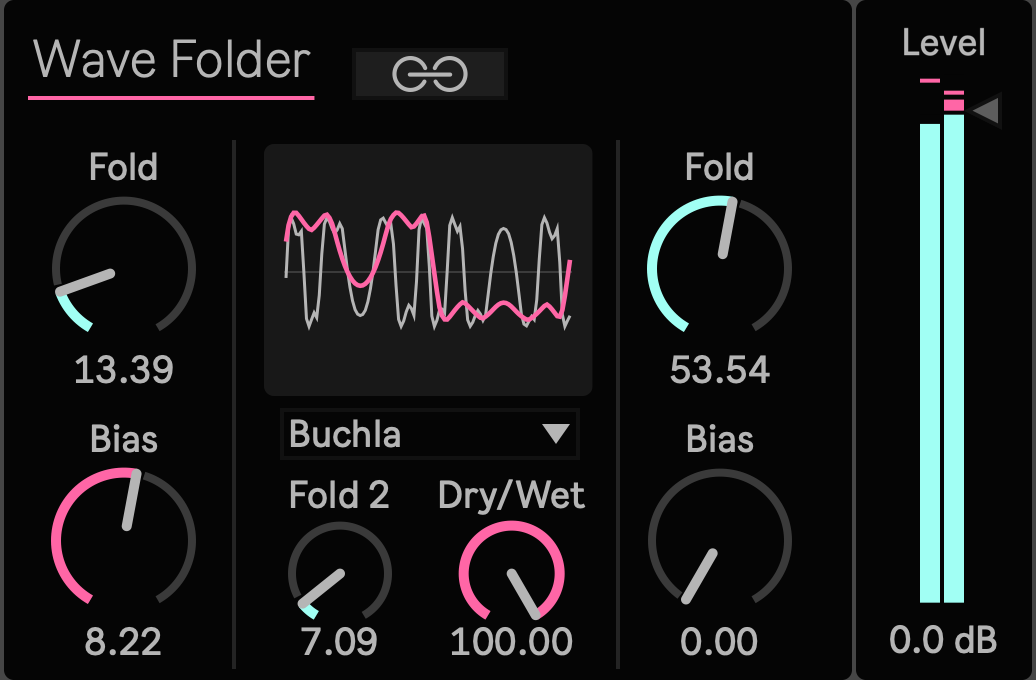
Wave Folder 5.5 keeps that process direct. Fold establishes the primary transformation, Fold 2 sends the result through a second serial folding stage, and Dry/Wet lets the new spectrum sit beside the original signal instead of replacing it completely. The device can move from subtle reinforcement to much more complex folding while keeping the relationship between the source and the processing easy to understand.
Three folding families, three different structures
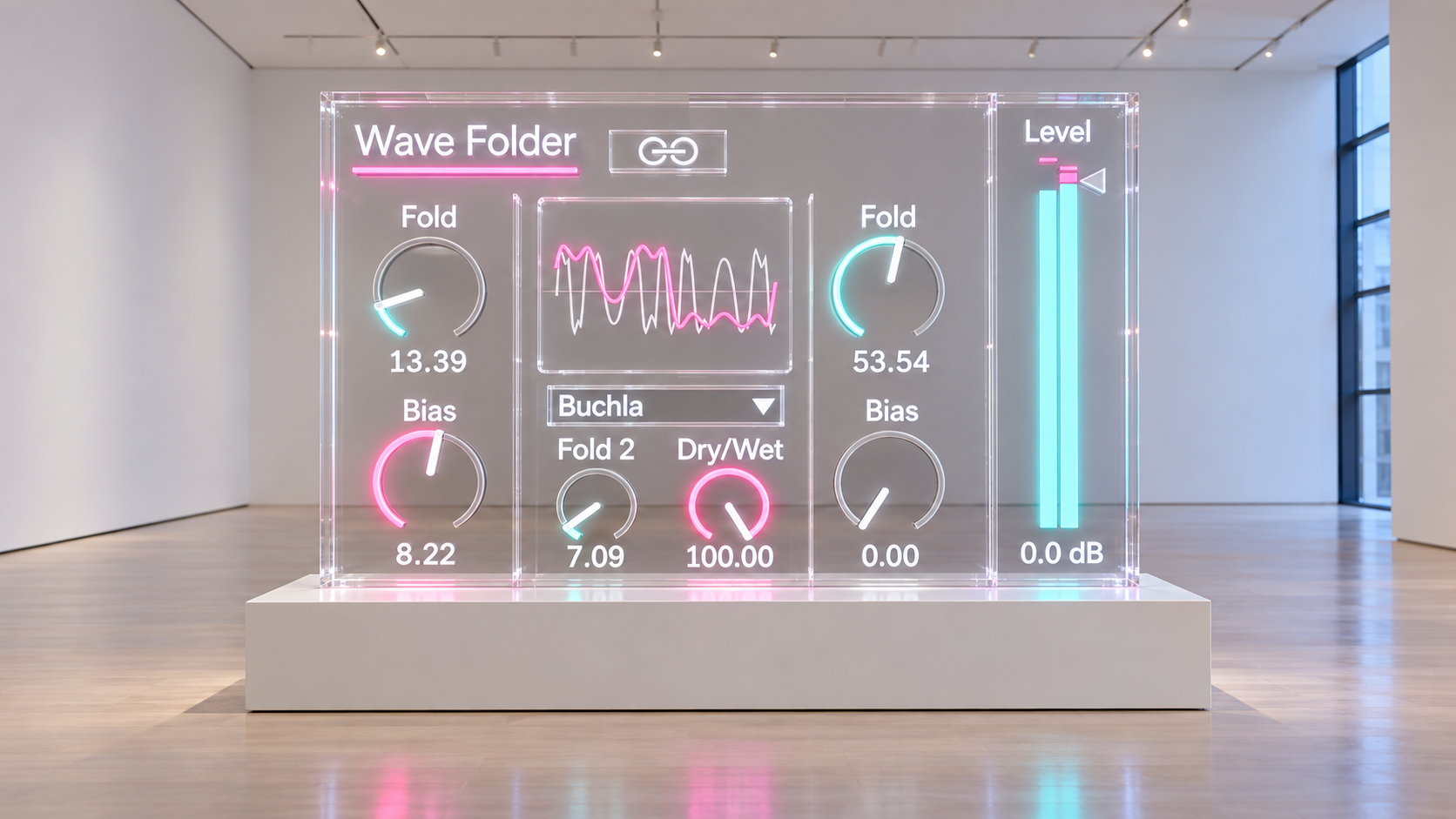
Normal, Buchla, and Serge are not presented as three cosmetic variations of the same shaper. Normal preserves the established Wave Folder folding path, while the other two modes use separate circuit derived model structures. Buchla mode draws from the Board 9 Timbre circuit of the Music Easel 208, using parallel threshold branches, weighted summing, and nonlinear feedback. Serge mode models the VCM middle section from Serge Wave Multipliers and uses a six stage serial nonlinear cascade.
That structural difference matters in use. Buchla can move through a branching, threshold driven transformation as Fold increases, while Serge develops complexity through successive nonlinear stages. The intention is not to claim component for component identity with every physical instrument. The practical value is that changing Mode changes the model structure that shapes the waveform, giving the same source several fundamentally different routes into harmonic complexity.
One fold can become two
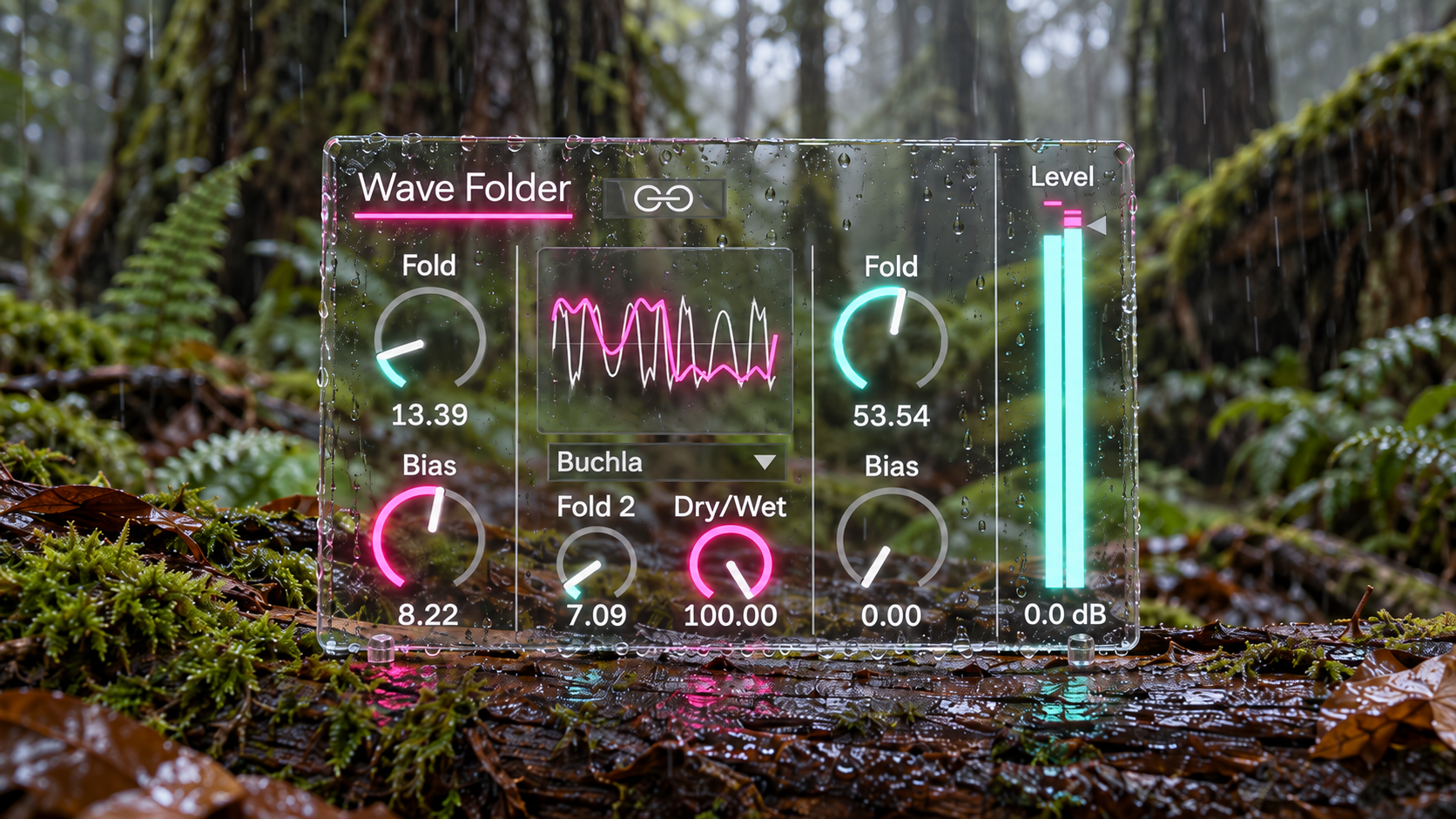
Fold L and Fold R control the first stage independently for the left and right channels. Fold 2 is not simply extra gain on the same control. It receives the waveform after the first folding stage and processes that already changed shape through a second stage using the currently selected Mode. When Mode is set to Normal, stage two stays with that family. Buchla and Serge likewise repeat their selected family in the second stage.
This makes the second control especially useful when the first stage has already reached an interesting region but the sound still needs another structural change. A modest Fold 2 value can introduce additional edges and harmonic density without forcing the first stage farther than necessary. At stronger settings, the two stages interact more dramatically because the second stage is no longer receiving the original source. It is folding a waveform that has already been folded once.
Bias changes the position of the signal before the first stage. This shifts the waveform relative to the folding thresholds and can create more asymmetric results without changing the Fold amount itself. For Buchla and Serge, Bias at zero is the reference condition for the hardware target model. Moving away from zero is a Wave Folder extension for deliberately pushing the shape into a less symmetrical region.
Stereo can stay centered or split apart
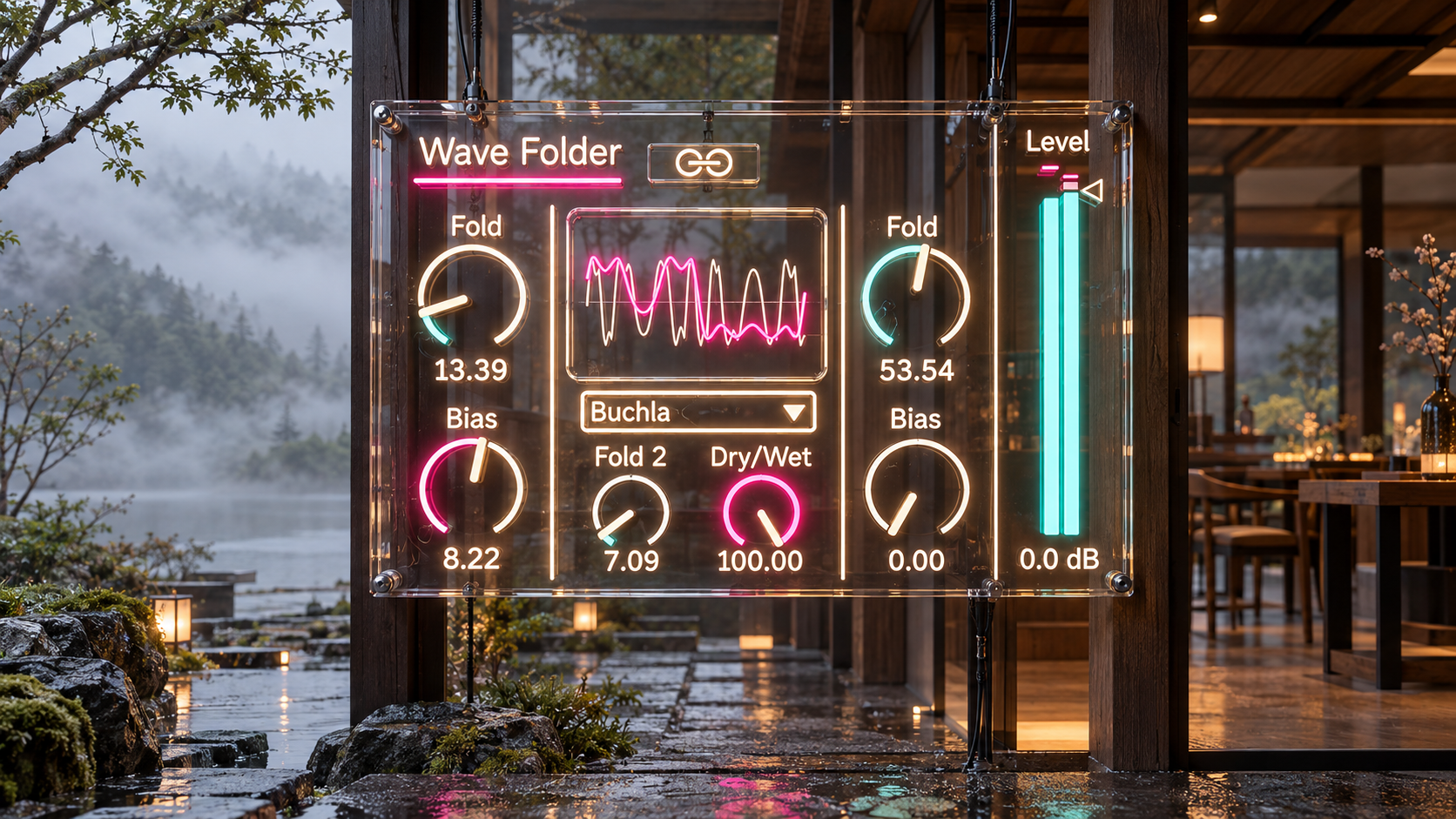
Wavefolding does not have to produce the same harmonic structure on both channels. With LR Link off, Fold and Bias remain independent for left and right, so small differences can create stereo movement from the nonlinear process itself rather than from a separate widening effect. The source can stay rhythmically and melodically centered while the harmonic details diverge around it.
When symmetry is preferable, LR Link routes the left Fold and Bias settings to both channels and deactivates the redundant right controls. This gives the device two clear operating approaches. Use linked control when the main goal is one coherent timbre. Leave the channels independent when the stereo image should gain movement from slightly different folding conditions.
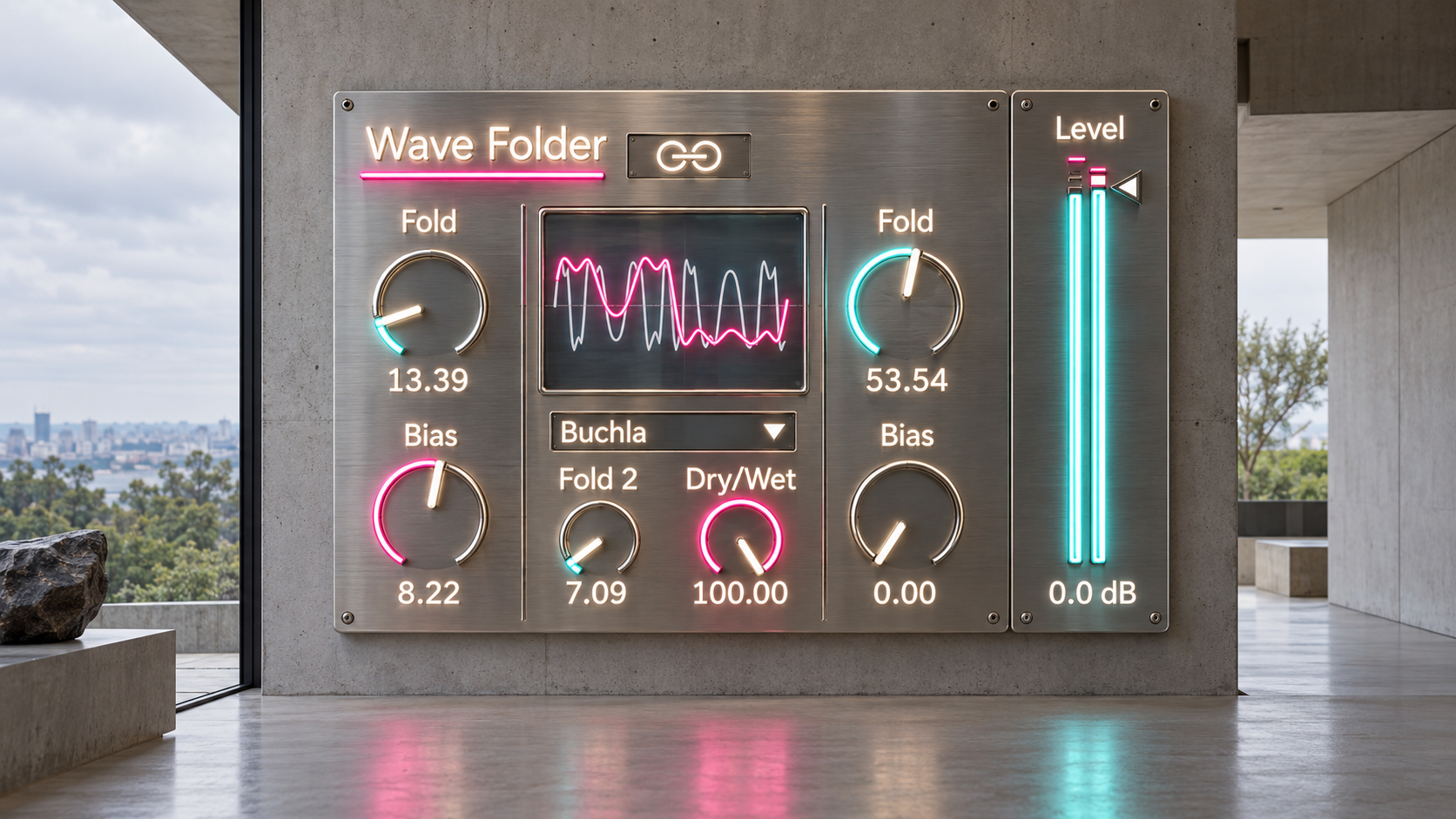
See the nonlinear state instead of watching the incoming waveform
The center display is intentionally different from an oscilloscope. Its visual reference is a sine wave, and the graphic predicts how the current control state would reshape that reference. Because the source used by the display stays constant, the graphic changes only when the processing state changes. A complex bass, drum, or synthesizer patch cannot obscure what the controls themselves are doing.
This makes the display especially useful with simple sources, where the connection between waveform shape and harmonic result is easy to hear, but it remains useful with denser material because it gives a stable visual reference. Mode, Fold, Bias, Fold 2, LR Link, Dry/Wet, and Level all contribute to the preview, so the display acts as a compact map of the current nonlinear state rather than as a meter for the audio passing through the device.
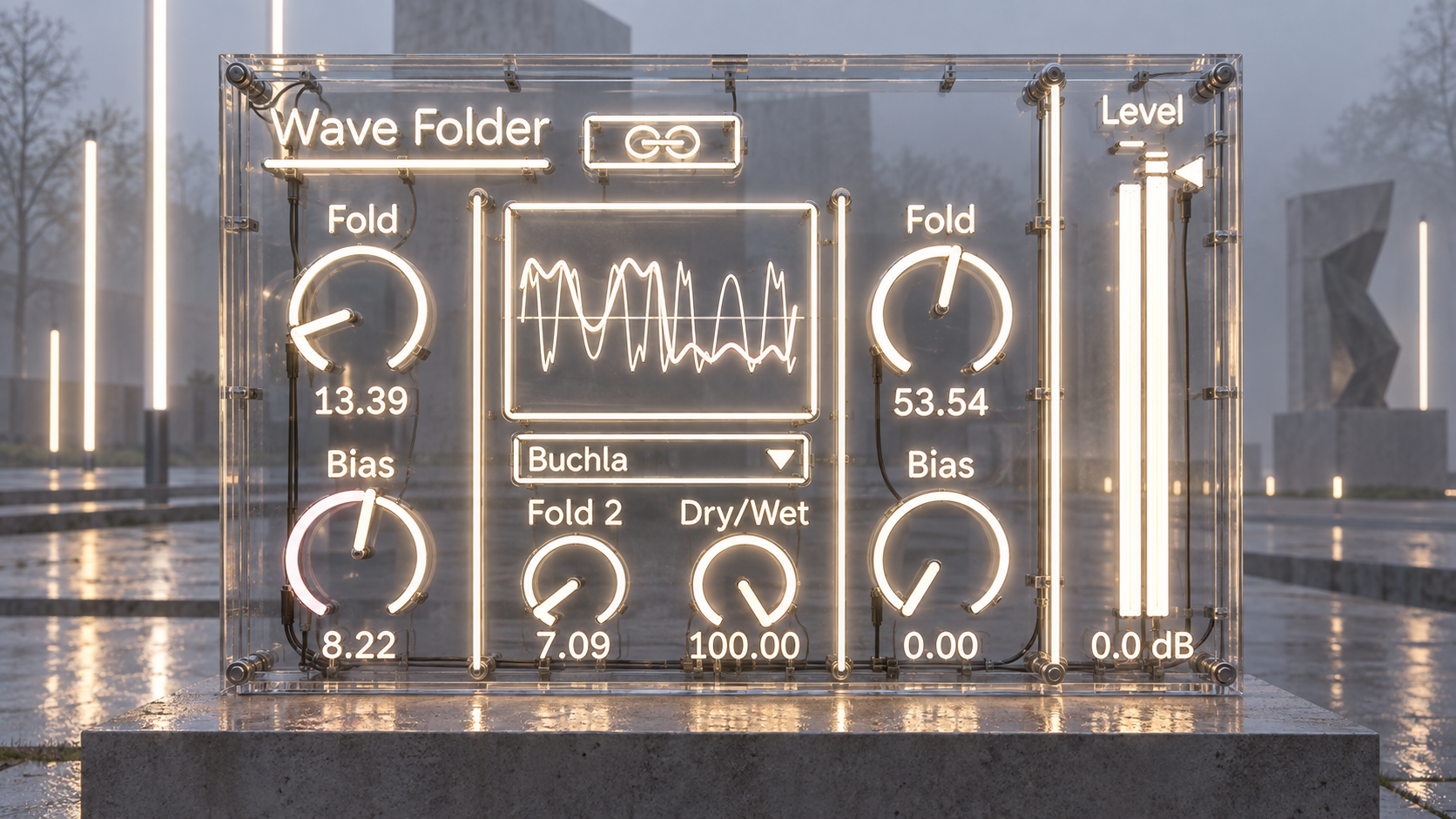
Use folding as movement, not only as distortion
A sine or triangle wave is the clearest place to hear the device, because new harmonic structure appears directly from the folding process. Bass sounds can gain upper detail without replacing the original fundamental, especially when Dry/Wet is used below full processing. Synth parts can move from relatively simple tones into denser shapes by automating Fold gradually, then introducing Fold 2 as a slower structural change. Independent channel settings can turn that same movement into stereo differentiation without adding another spatial processor.
Dry/Wet uses a constant power style balance between the original stereo signal and the processed path, which makes parallel use practical when the folded result has the right edge but too much density on its own. Level sits after the blend so perceived loudness can be compensated before the signal reaches the next device. The result is a compact workflow for treating wavefolding as a compositional timbre control rather than only as an extreme distortion effect.
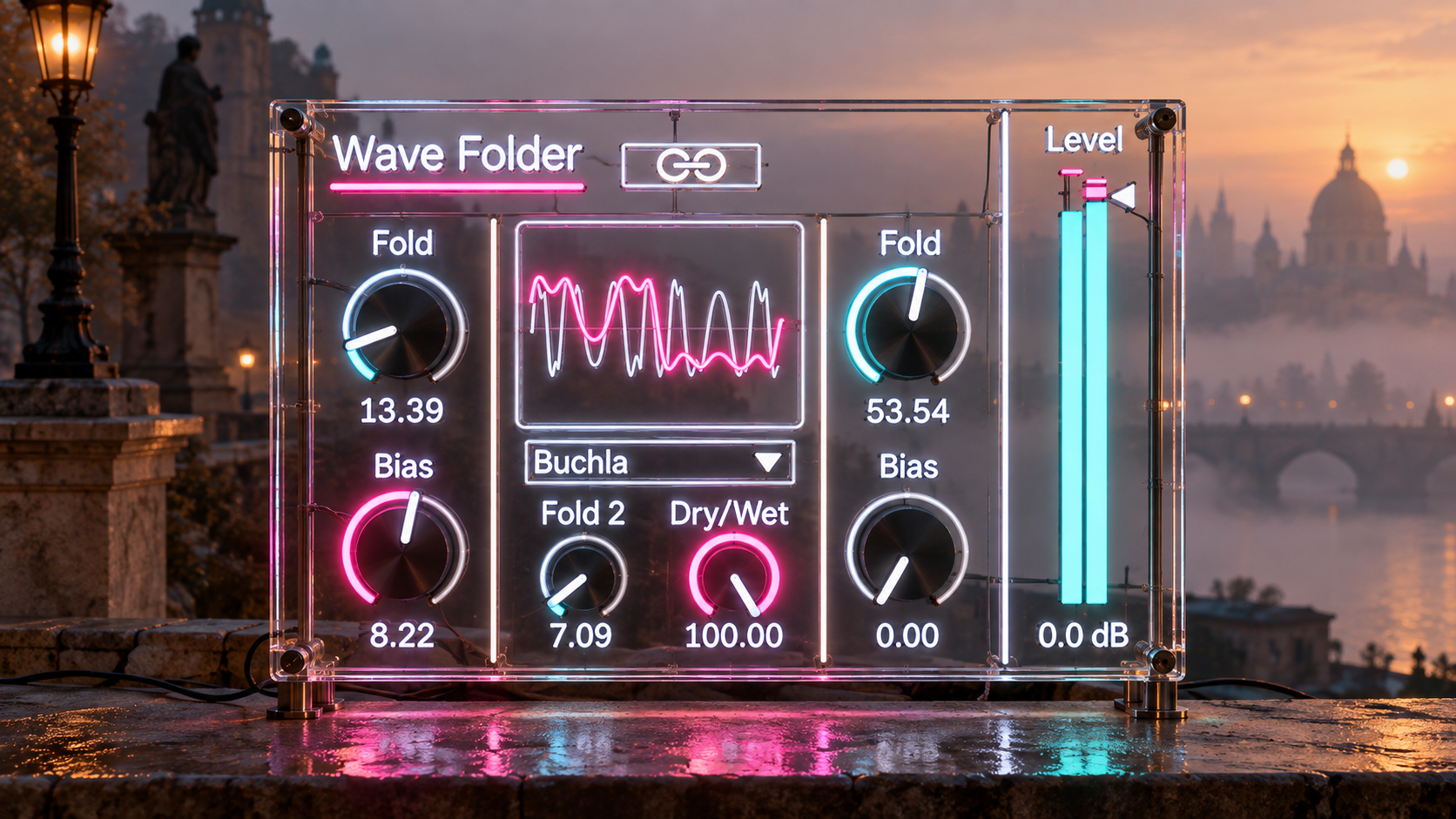
Built for Ableton Live
Wave Folder 5.5 is supplied as a Max for Live stereo audio effect. The current release targets Ableton Live 12 with Max 9, with macOS and Windows as the repository target platforms. The device uses a compact set of public controls rather than a preset system, keeping the focus on direct interaction with Mode, Fold, Bias, Fold 2, LR Link, Dry/Wet, and Level.
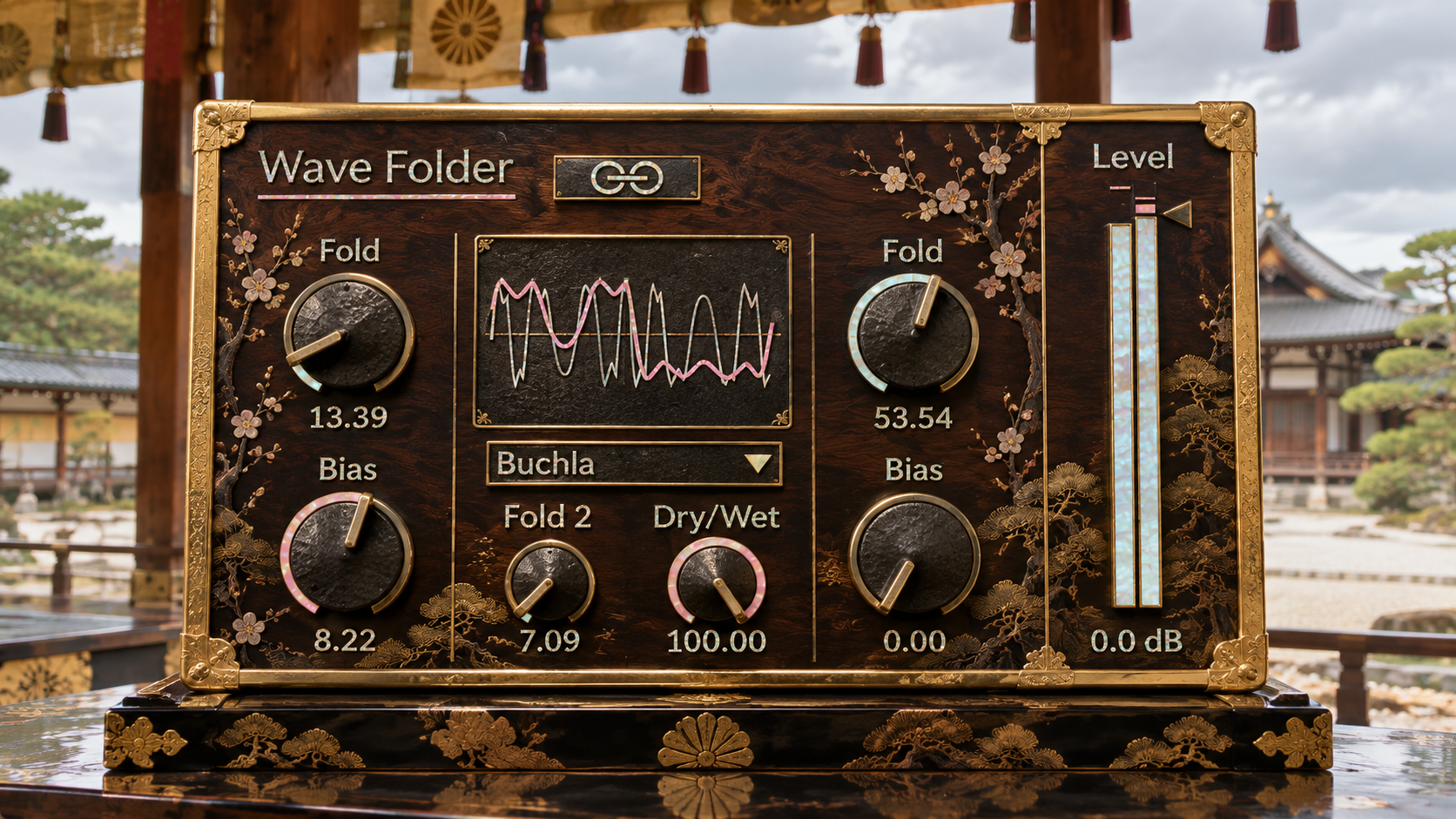
Free lifetime updates
Your purchase includes free lifetime updates. Future published versions of Wave Folder are included at no additional cost. Existing users can access the latest published files through the Sellfy account used for the original purchase, so a new purchase is not required when another version is published.
v.5.5 ... Rebuilt the Buchla and Serge modes with circuit derived model structures, added a mode matched serial Fold 2 stage, introduced a parameter driven sine waveform preview. (2026/9/26)
v.5.01 ... Added buchla & serge modes. (2026/3/24)
v.4.1 ... Updated UI & second folding algorithm. (5/17/2025)
v.1.2 ... DC Blocking added.
v.2.0 ... UI Updated.
v.2.5 ... UI Updated.
v.3.0 ... Stereo Separated.
v.4.0 ... Second fold circuit added. (2024/6/27)
Waveshaping & Nonlinear Processing
Wave Folder https://akihikomatsumoto.sellfy.store/p/abletonwavefolder/
Stereo wave folder combining distinct Serge and Buchla inspired folding modes with independent left and right shaping.
Lotka Volterra https://akihikomatsumoto.sellfy.store/p/ableton-lotka-volterra/
Nonlinear audio processor that applies predator prey dynamics to evolving modulation and feedback.
Sine Shaper https://akihikomatsumoto.sellfy.store/p/ableton-sine-shaper/
Sine function waveshaper that transforms smooth signals into increasingly complex harmonic spectra.
Japanoise https://akihikomatsumoto.sellfy.store/p/ableton-japanoise/
Destructive processor combining wave folding, distortion, shaping, bit crushing, and filtering.
EXTortion https://akihikomatsumoto.sellfy.store/p/abletonextortion/
Stereo distortion that processes the left and right channels as independent nonlinear systems.
Akihiko Matsumoto
Study Site https://akihikomatsumoto.com/study/
Ableton M4L, Serum Preset Store https://akihikomatsumoto.com/download/
Sample Pack https://akihikomatsumoto.sellfy.store/sample-pack/
Bandcamp https://akihikomatsumoto.bandcamp.com
Ableton Skin https://akihikomatsumoto.sellfy.store/p/ableton-skin-pack/
Spotify https://open.spotify.com/artist/1tZMmxzZbvNu6klyKXa0L1?si=2JZaFeLbREi-UownD8POSg