
$22.90+
Ableton 2290 Delay v.1.1 Max for Live Device (.amxd file)
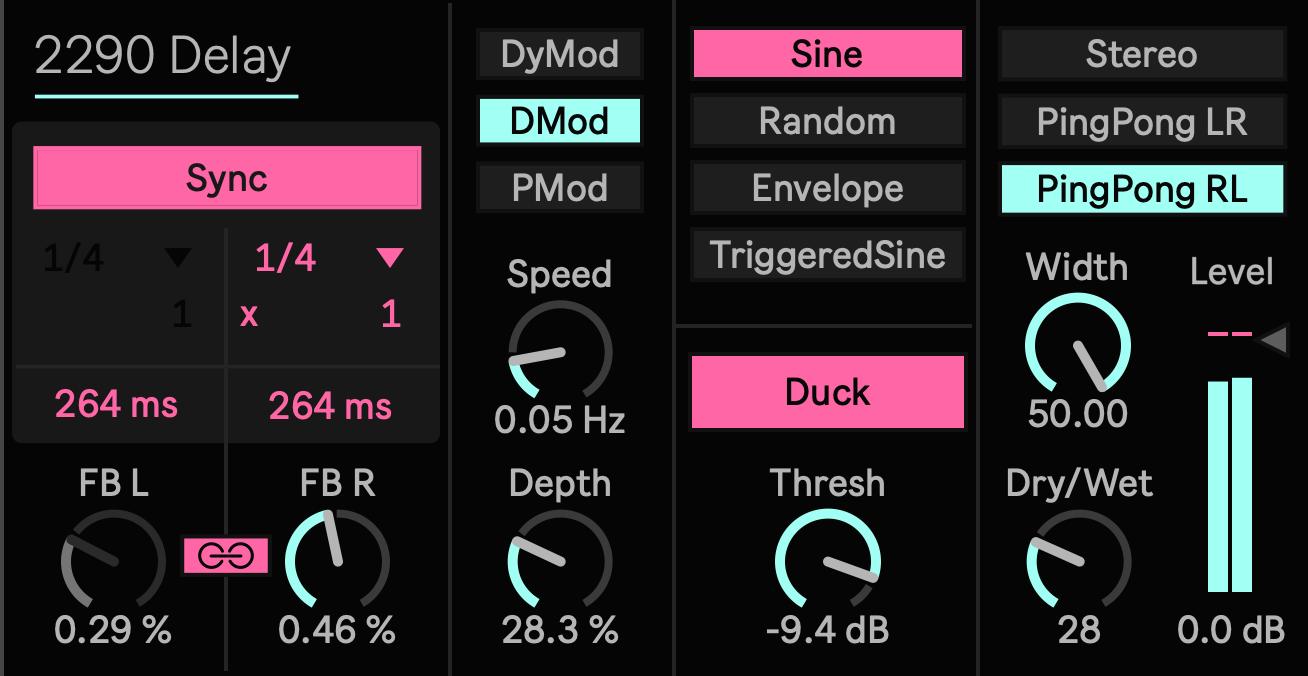
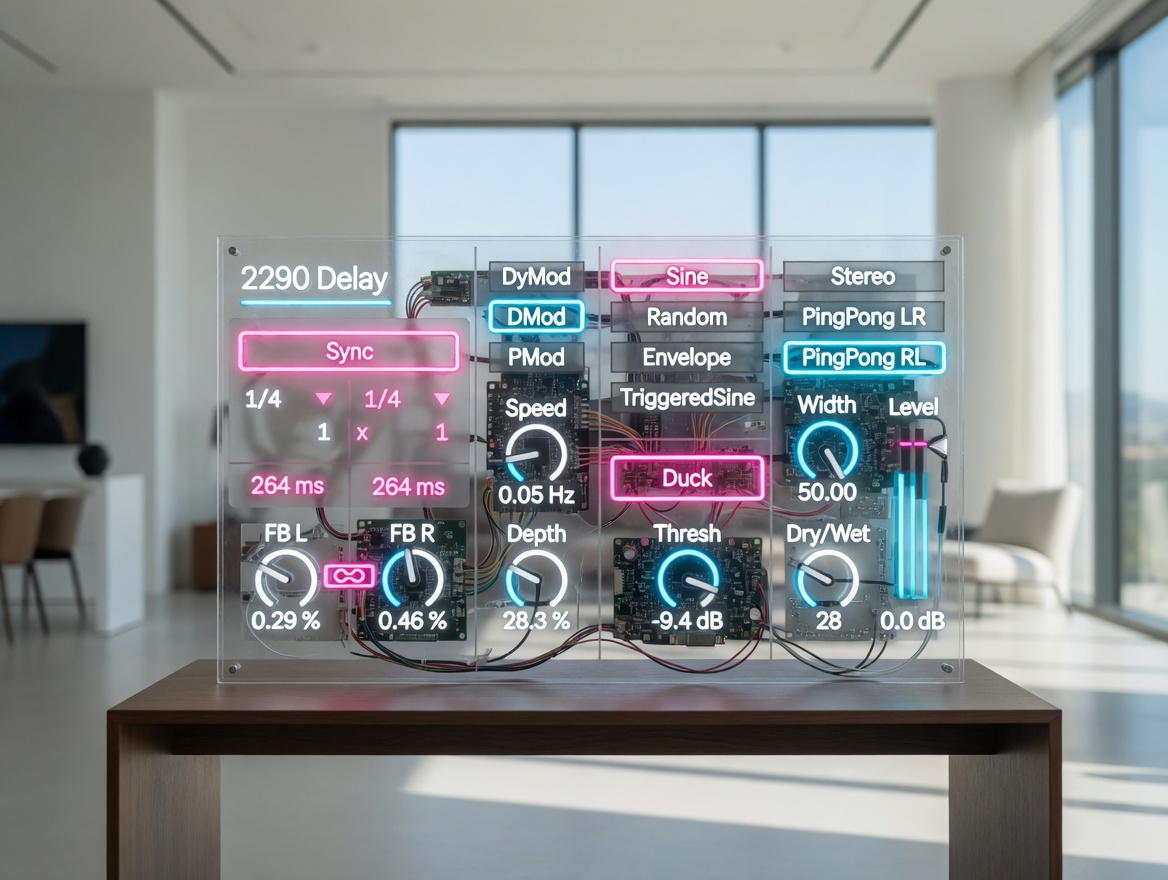
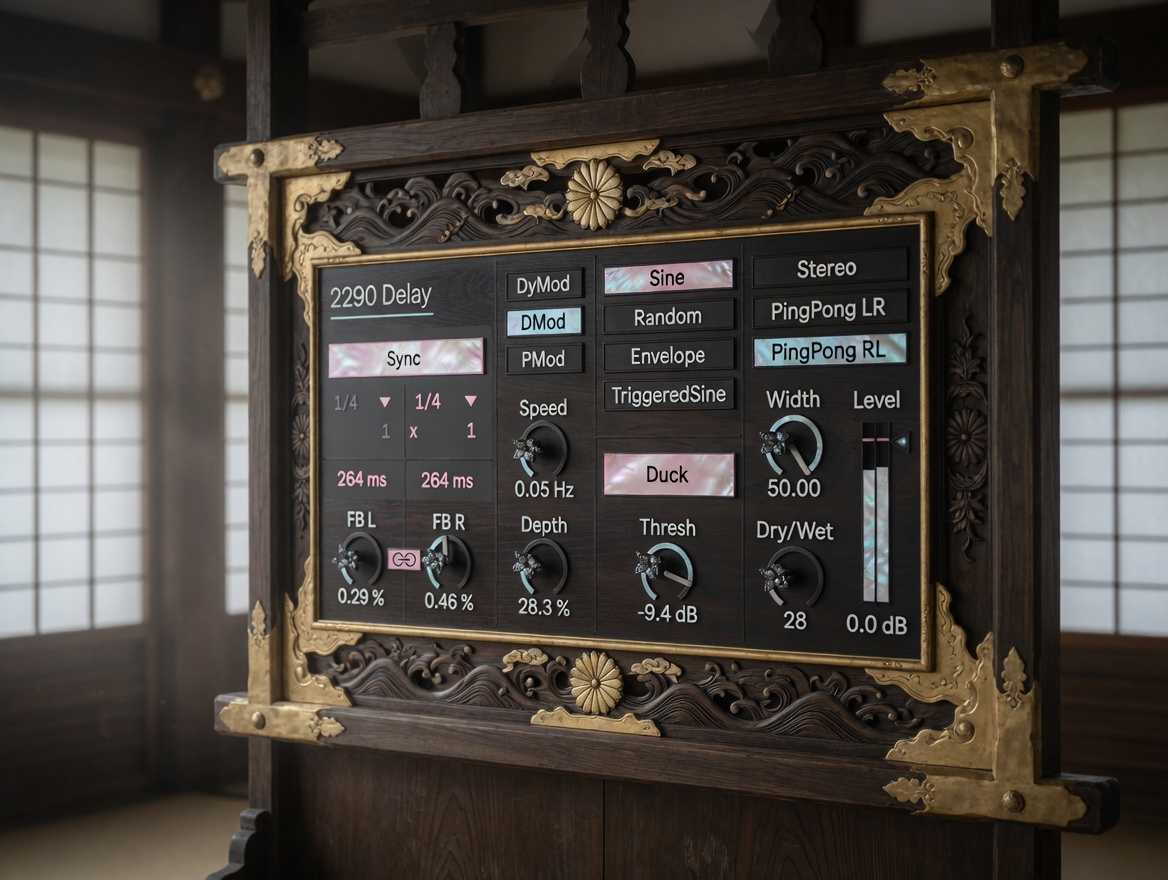
2290 Delay
In the early phase of digital studio engineering, before workstation environments became standardized, delay processing was not simply a utility. It was a defining layer of spatial perception, shaped as much by the limitations of conversion technology as by algorithmic design. Engineers worked within constraints of early ADDA stages, clock instability, and memory boundaries. What emerged from those constraints was not imperfection in the negative sense, but a distinct temporal texture that modern systems rarely reproduce.
This device approaches that condition as a technical reconstruction problem rather than a stylistic imitation.
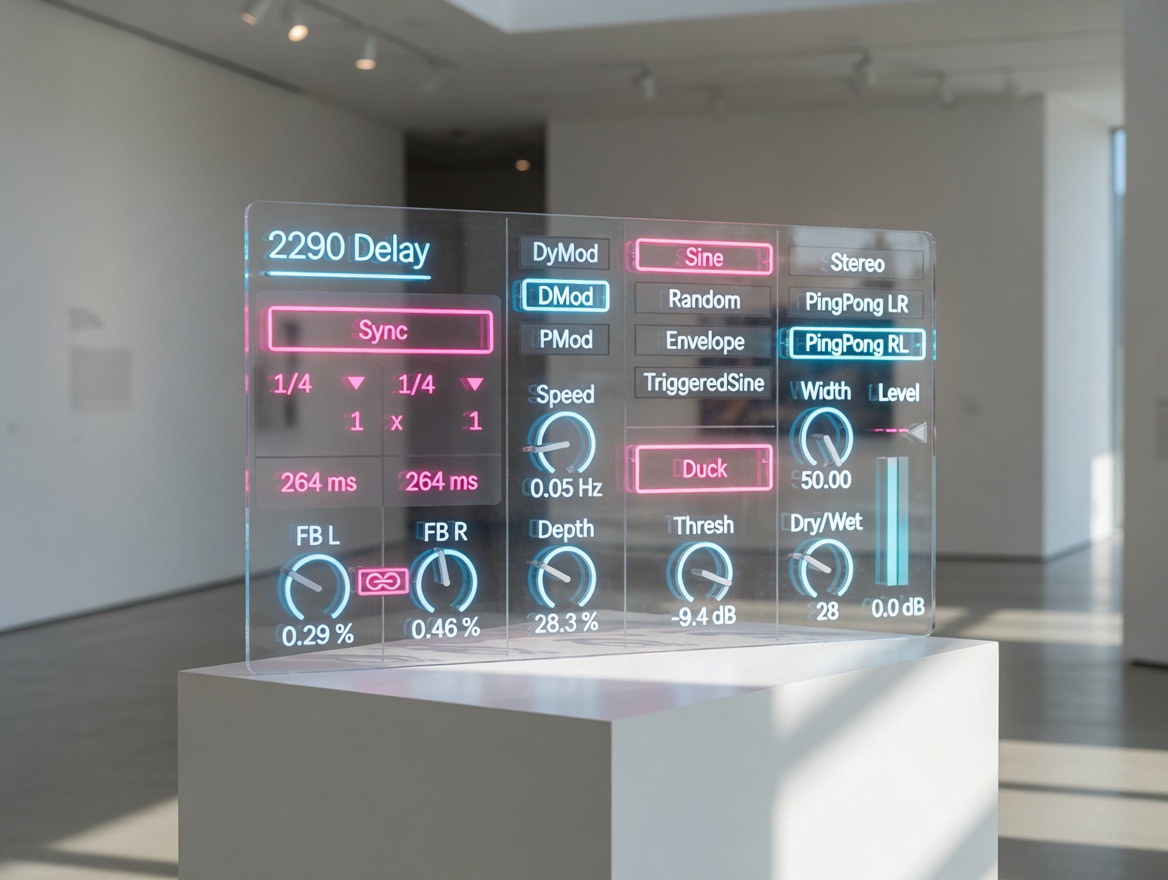
A Study in Conversion Character
The core focus is not only the delay line itself, but the behavior of signal degradation across repeated passes. The original hardware, exemplified by TC Electronic TC2290, introduced subtle spectral softening and phase diffusion through its conversion stages. This is not equivalent to applying bit reduction or bandwidth limitation. Those methods impose static coloration, whereas early digital conversion produced a dynamic shift that evolved with each feedback cycle.
2290 Delay models this progressive transformation. High frequency content dissolves gradually, transient edges relax, and the signal migrates perceptually behind the dry source without masking it.
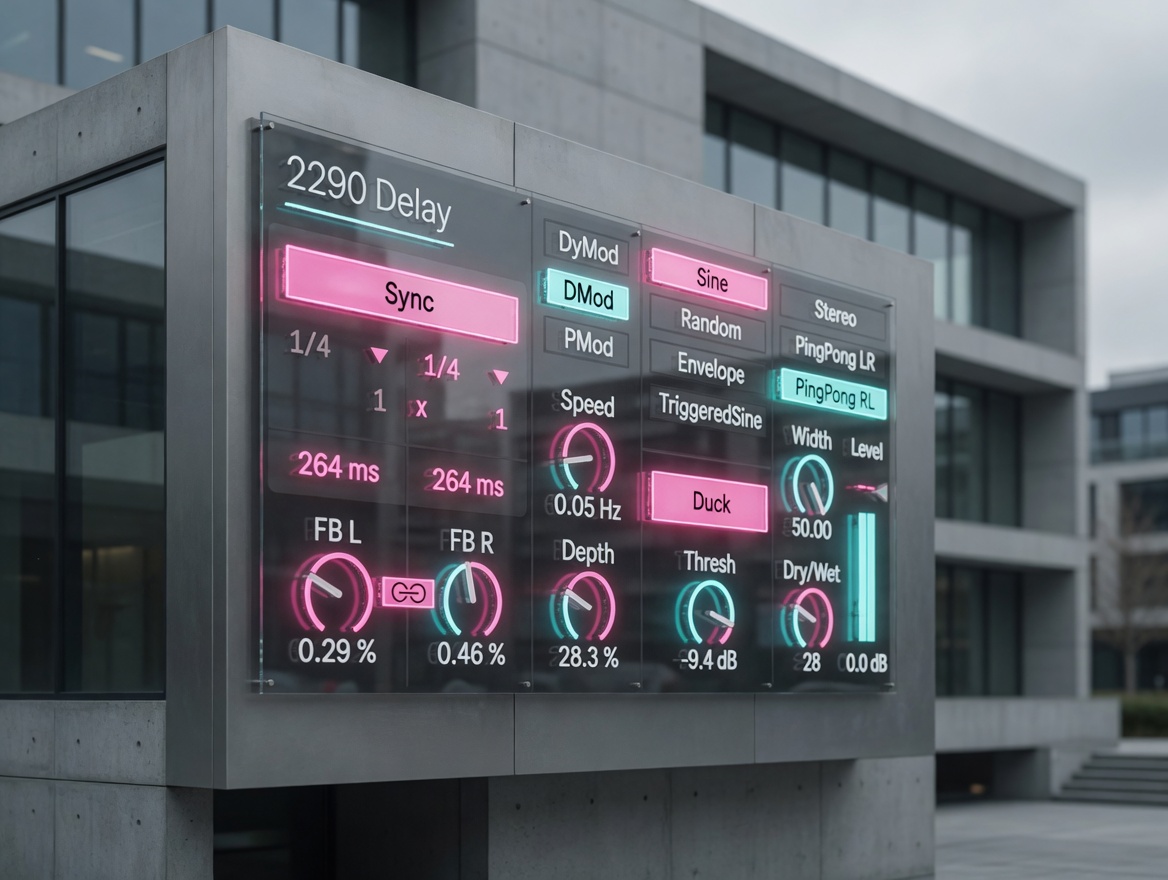
Temporal Behavior and Spatial Priority
Modern delay tools often emphasize clarity and presence. Here, the priority is inversion of that hierarchy. The delayed signal yields to the original, occupying a secondary spatial layer. This is achieved through controlled degradation combined with amplitude shaping.
A built in ducking system further reinforces this behavior. When input energy increases, the delayed signal recedes. When space opens, the delay returns. The result is not simply cleaner mixes, but a more fluid temporal interaction between foreground and background.
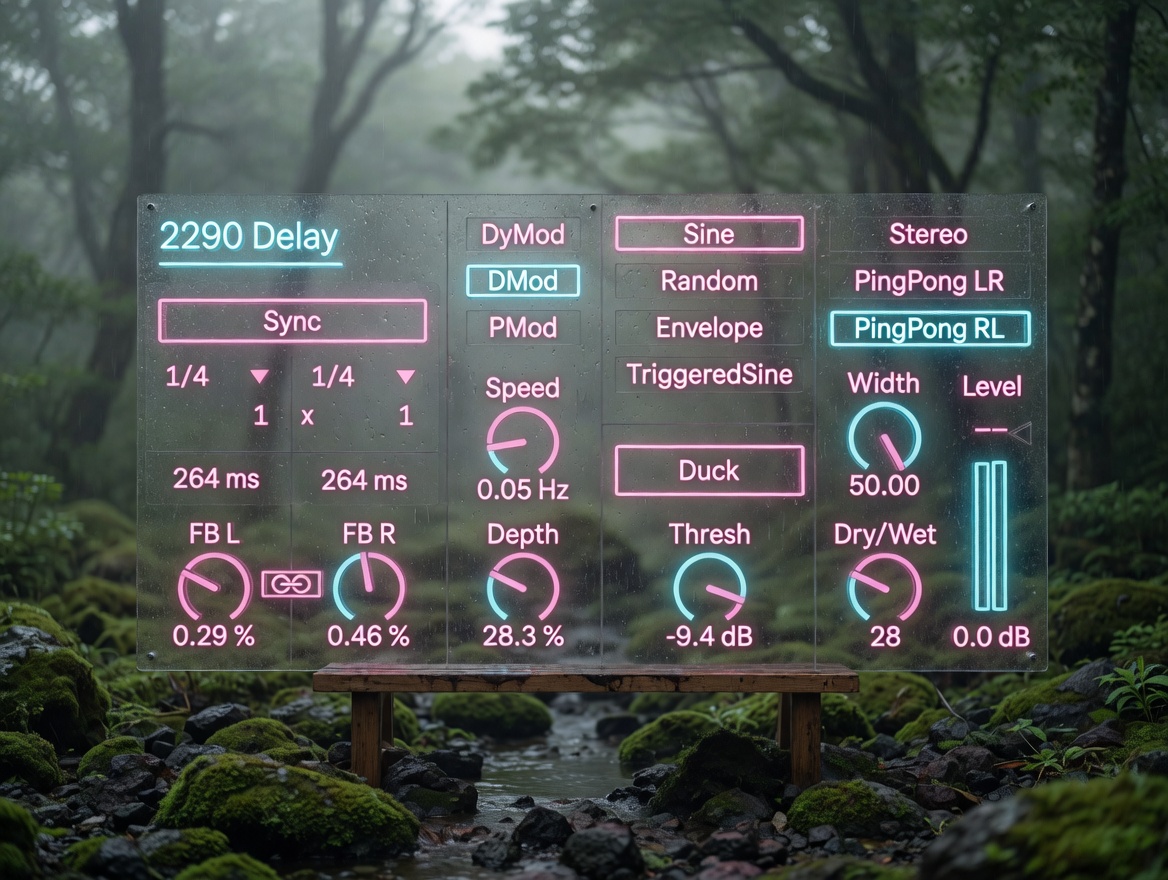
Extensions Beyond the Original Framework
While grounded in historical reference, the system is not bound by it. A ping pong mode introduces stereo motion absent from the original unit, expanding spatial articulation without compromising the underlying tonal model.
The intent is not authenticity as nostalgia, but authenticity as a set of measurable behaviors translated into a contemporary production context.
Integration in a Modern Workflow
Designed as an Ableton Max for Live device, it operates within current DAW ecosystems while preserving a distinct processing identity that resists the homogenization typical of modern delay plugins.
This makes it particularly relevant for workflows that seek contrast rather than refinement, especially in sound design contexts where temporal artifacts are treated as compositional material.
On Continuity
Access to ongoing revisions is maintained through the distribution platform Sellfy. Once acquired, updates remain available without additional cost through the same account, allowing the device to evolve alongside its use.
v.1.1 ... Improved overall circuit modeling fidelity. (2026/5/26)
v.1.0.3 ... Fixed PingPong gain bug. (2026/5/15)
v.1.0.2 ... Fixed dry mix bug. (2026/5/9)
Delay
2290 Delay https://akihikomatsumoto.sellfy.store/p/ableton-2290-delay/
REcho https://akihikomatsumoto.sellfy.store/p/abletonrecho
Analog Delay https://akihikomatsumoto.sellfy.store/p/abletonanalogdelay/
Bouncing Delay https://akihikomatsumoto.sellfy.store/p/abletonbouncingdelay
Shoegazer Reverse Gate https://akihikomatsumoto.sellfy.store/p/abletonshoegazerreversegate/
VDB Delay https://akihikomatsumoto.sellfy.store/p/abletonvdbdelay
Reverse Delay https://akihikomatsumoto.sellfy.store/p/abletonreversedelay/
Mod Delay https://akihikomatsumoto.sellfy.store/p/ableton-mod-delay/
Tap Delay https://akihikomatsumoto.sellfy.store/p/abletontapdelay/
Color Delay https://akihikomatsumoto.sellfy.store/p/abletoncolordelay/
Graneon https://akihikomatsumoto.sellfy.store/p/ableton-graneon/
Akihiko Matsumoto
Study Site https://akihikomatsumoto.com/study/
Ableton M4L, Serum Preset Store https://akihikomatsumoto.com/download/
Sample Pack https://akihikomatsumoto.sellfy.store/sample-pack/
Bandcamp https://akihikomatsumoto.bandcamp.com
Ableton Skin https://akihikomatsumoto.sellfy.store/p/ableton-skin-pack/
Spotify https://open.spotify.com/artist/1tZMmxzZbvNu6klyKXa0L1?si=2JZaFeLbREi-UownD8POSg