
$14.99+
Ableton DD-2 Delay v.2.0
Max for Live Device (.amxd file) : Deciphering the 1983 Digital Architecture
In the early 1980s, the transition from analog bucket brigade devices to digital sampling introduced a profound technical challenge. Engineers were tasked with fitting the immense dynamic range of electric guitars and synthesizers into a highly restrictive 12-bit linear space. The resolution of a 12-bit Successive Approximation Register (SAR) Analog-to-Digital Converter inherently provides only 72 dB of theoretical dynamic range. This limitation risks severe quantization noise, often described as a harsh digital crunch, when signals decay.
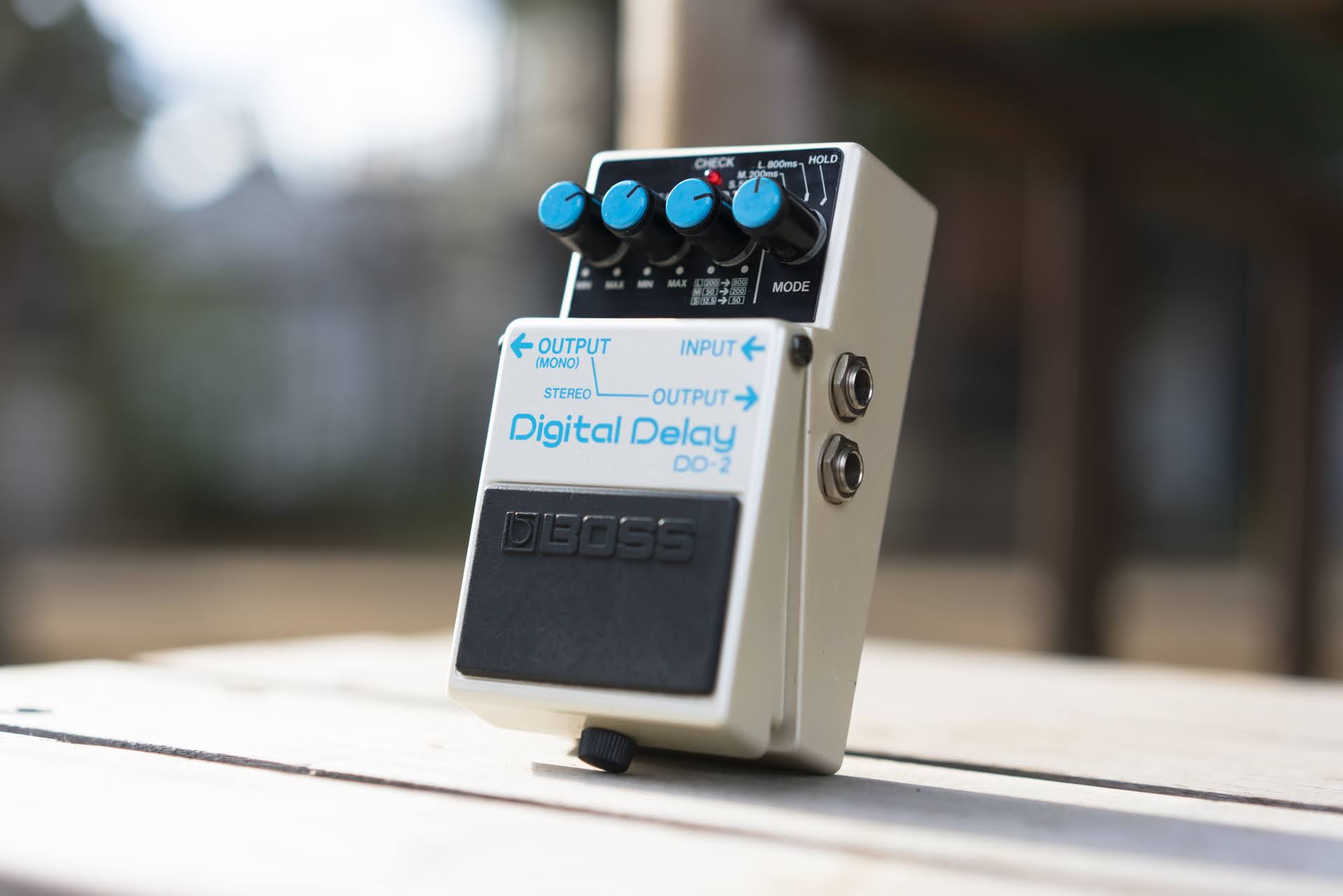
The historical solution implemented in the 1983 Boss DD-2 was not to expand the digital bit depth, but to surround the digital core with sophisticated analog conditioning. This hybrid topology created a specific sonic footprint that modern linear digital delays fail to replicate. It was an exercise in managing non-linearities, filtering, and mathematical compromises to achieve what musicians perceived as a remarkably clean, yet organic and cohesive echo.
Make the Repeat Sound Like a Machine
A delay repeat does not have to come back clean.
DD2 Delay is made for the moment when a normal digital delay feels too smooth, too transparent, or too detached from the sound. Put it on a synth line, guitar phrase, vocal fragment, drum hit, dub stab, or return channel, and the echo comes back with a narrower body, a harder digital edge, and a darker trace each time it repeats.
It is not only a delay time utility. It is a way to make the repeat feel like it passed through an older digital object before returning to the mix.
A Digital Echo That Loses Light as It Repeats
DD2 Delay focuses on the character of early digital delay rather than modern transparency.
The repeat is shaped before it reaches the delay path, compressed, converted through a 12 bit style stage, held with a clock like motion, expanded again, and then sent back through a feedback path that gradually removes brightness. The result is an echo that does not simply become quieter. It becomes smaller, darker, and more distant.
Short settings can thicken a dry source without making it sound like a room. Medium settings can place a snare, pluck, or lead behind the beat with a thin digital shadow. Longer settings can turn a phrase into a fading memory that still keeps the DD2 style edge.
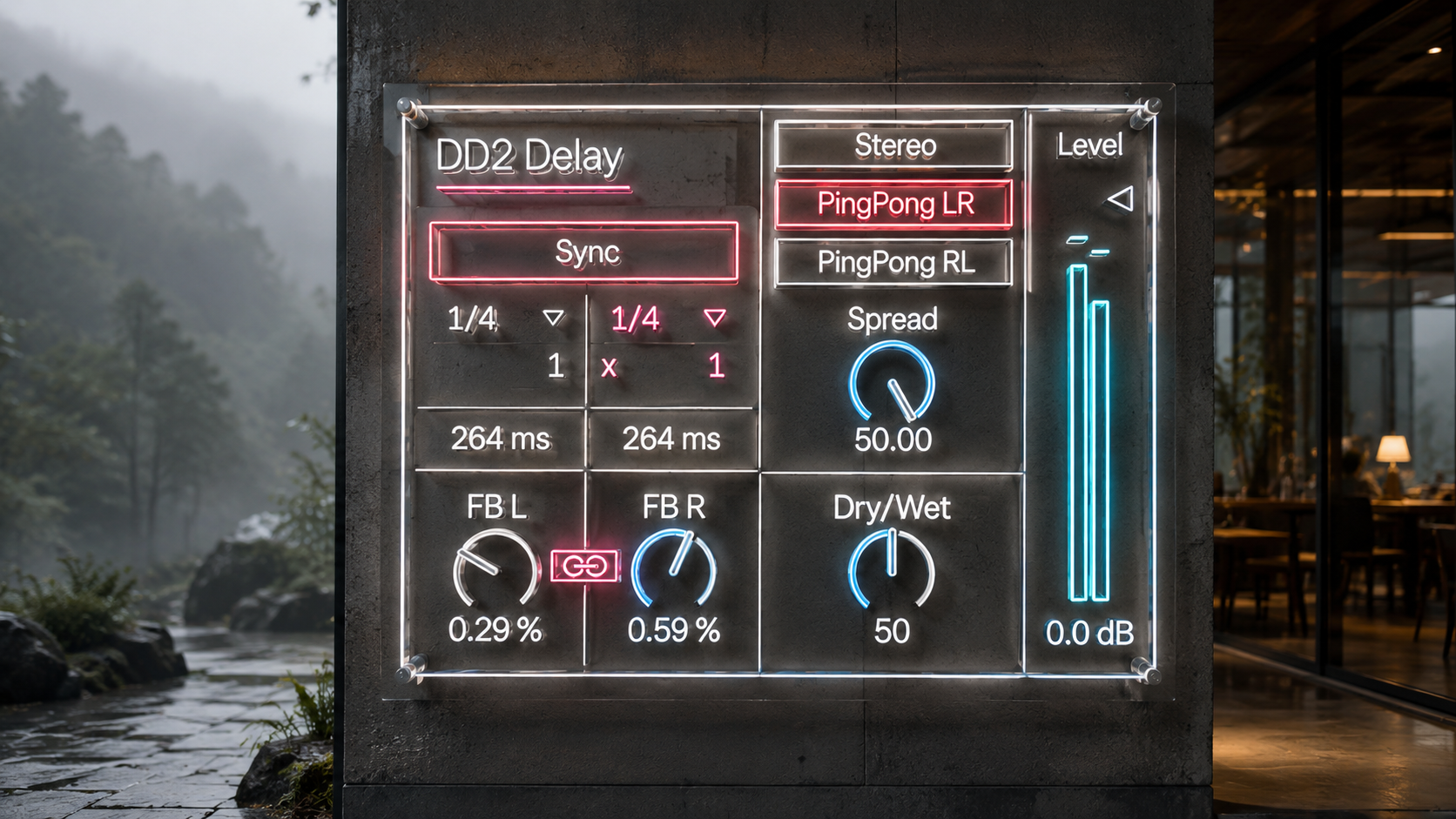
Controls That Feel Like Timing, Color, and Return
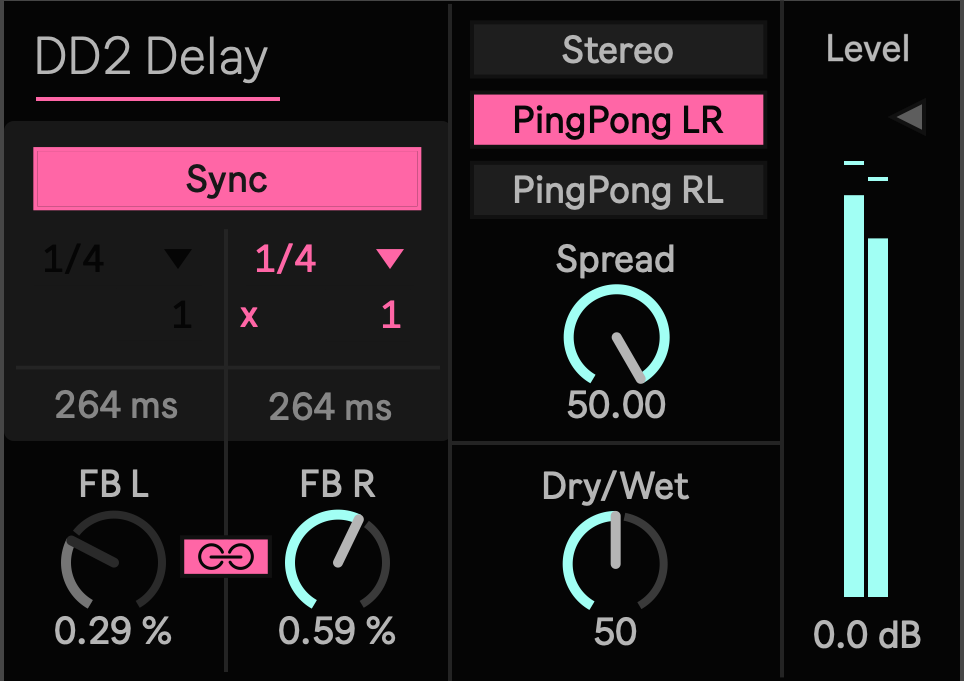
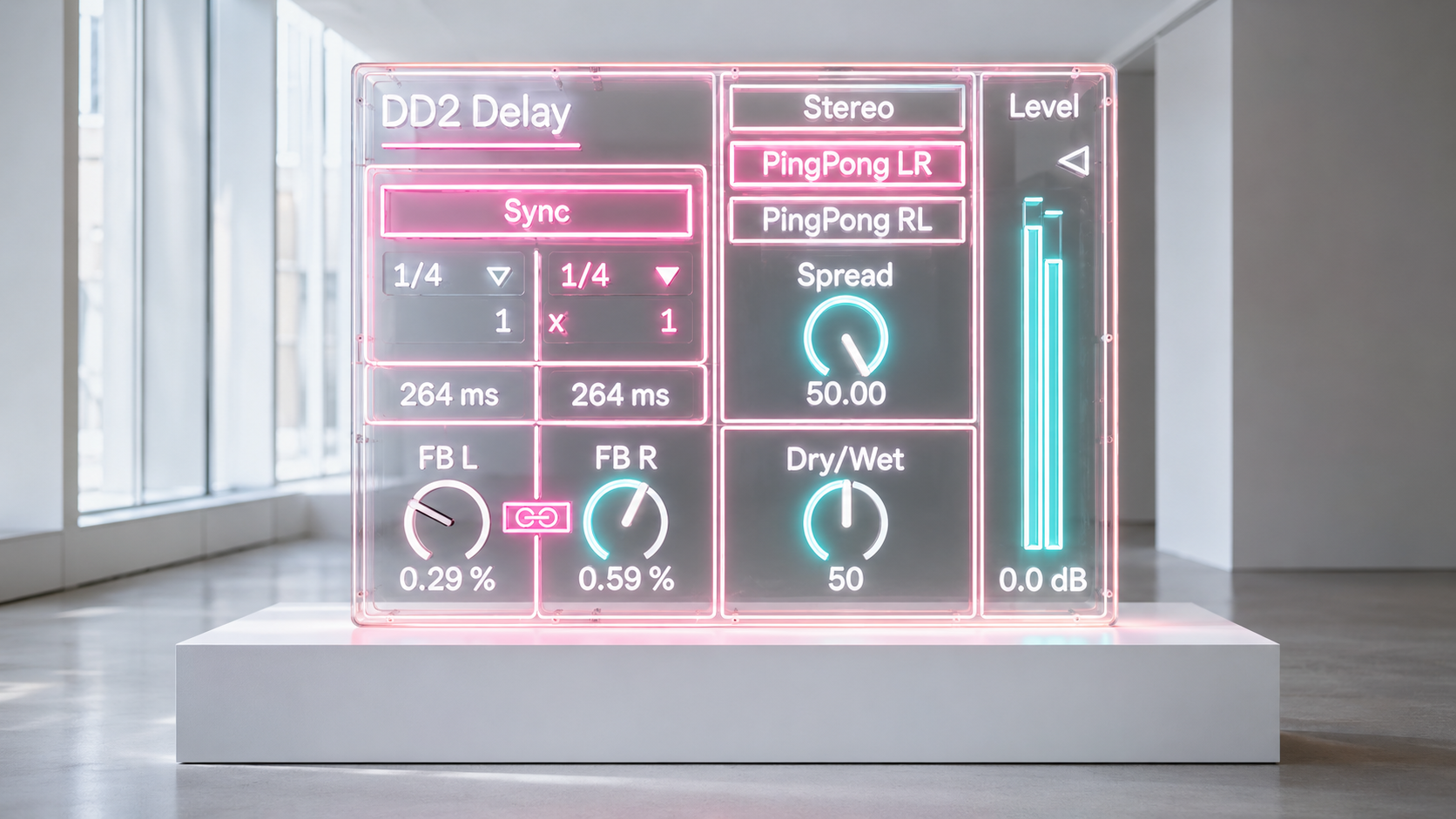
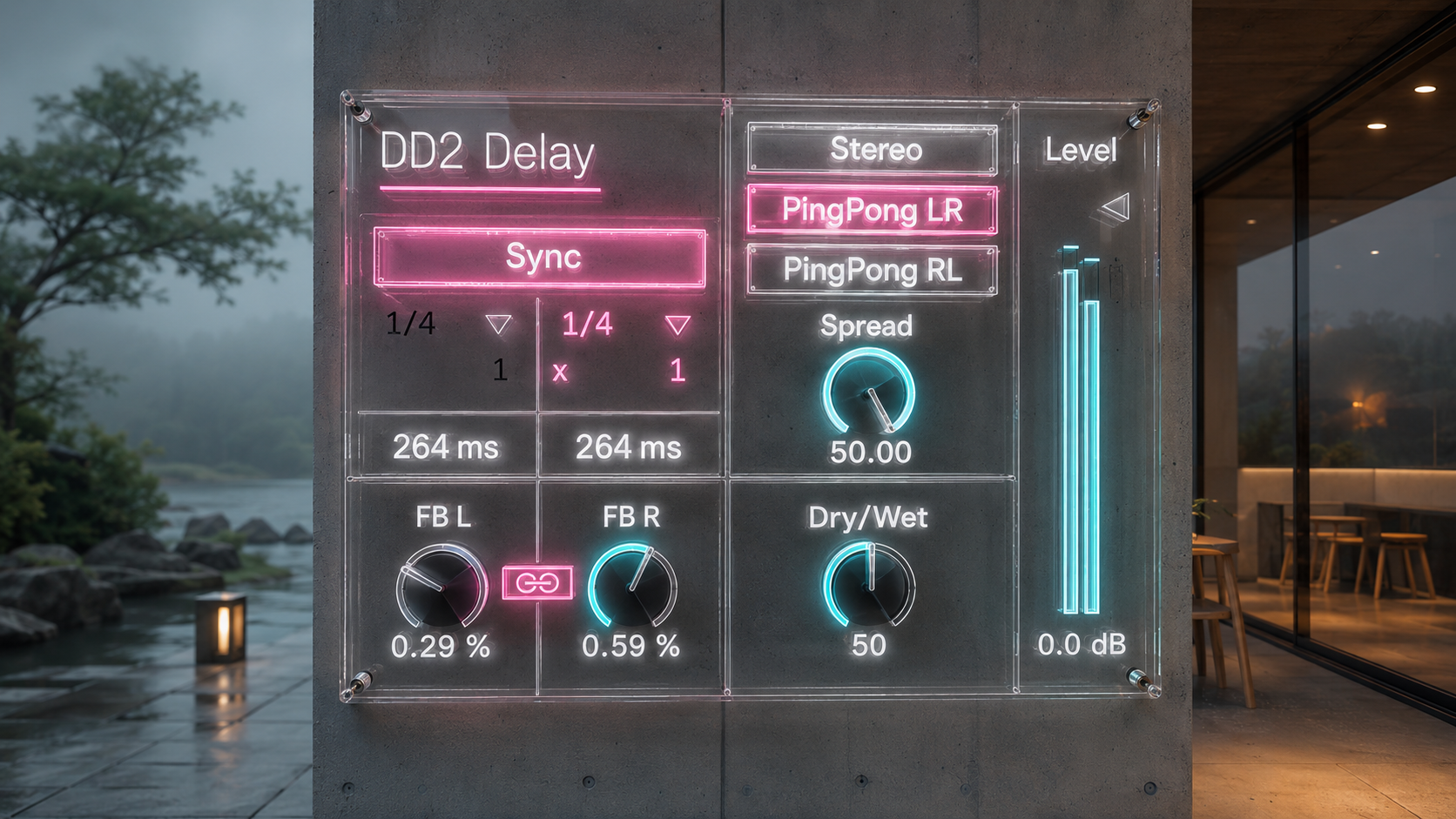
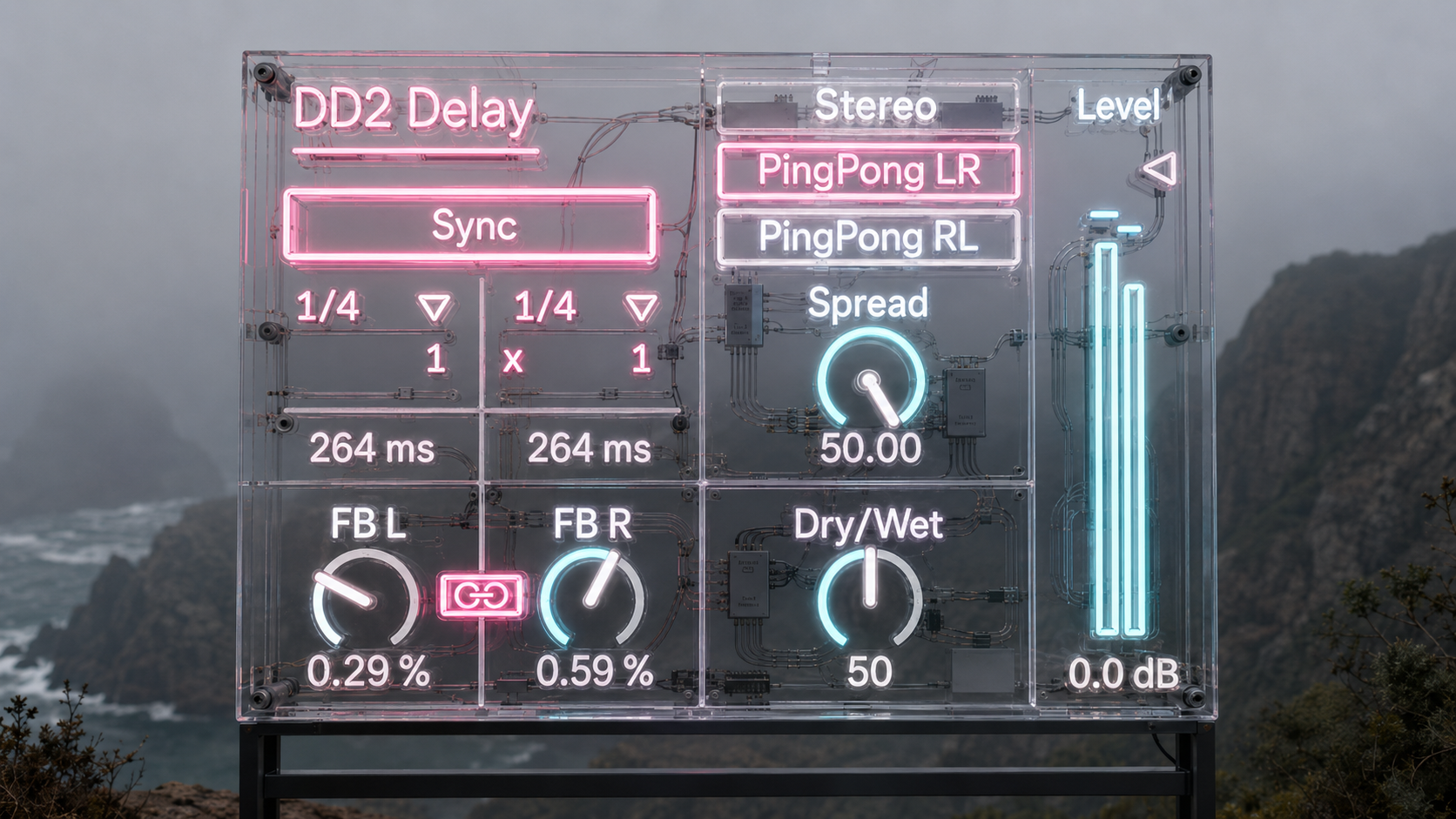
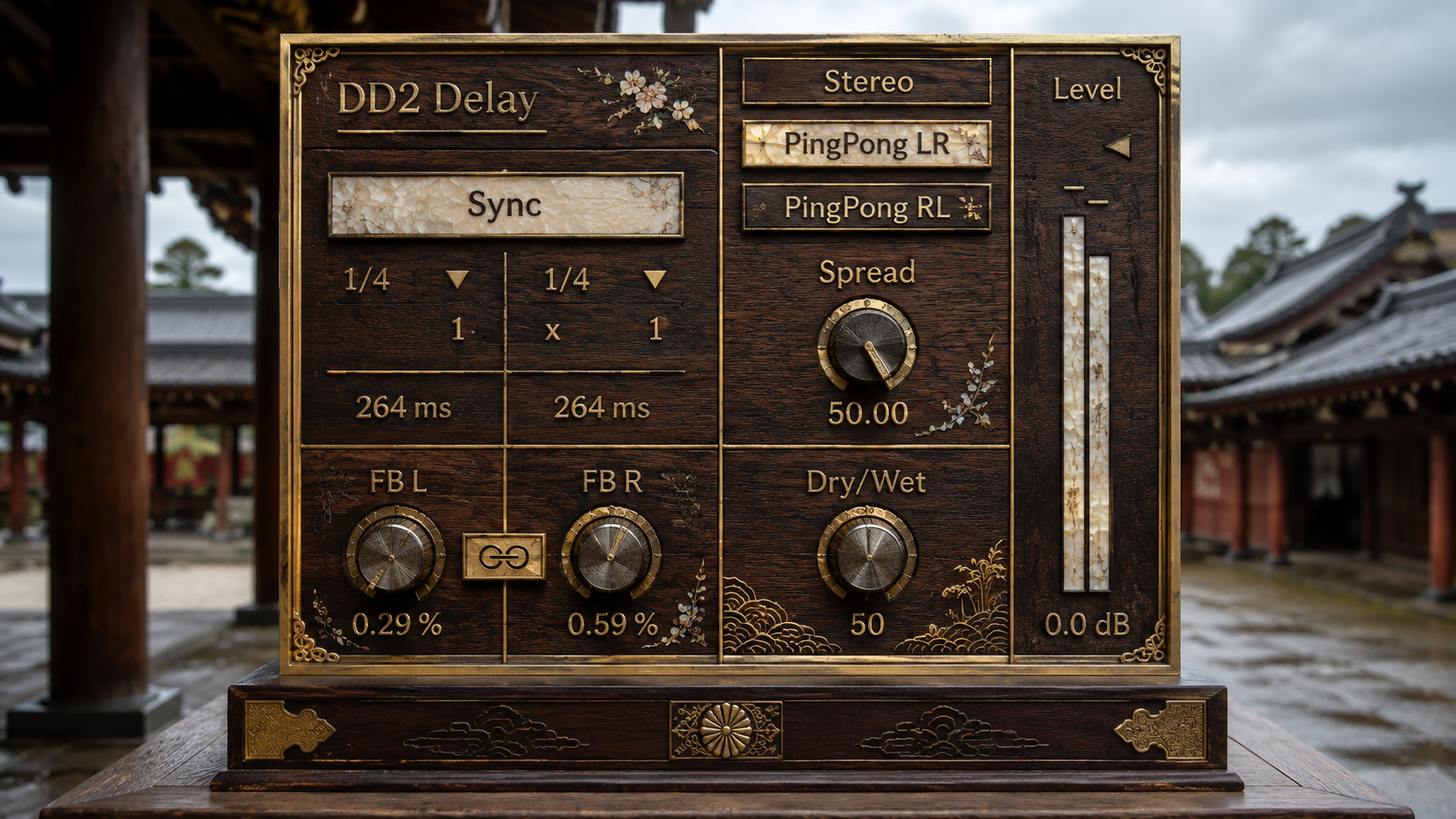
DelayTimeL and DelayTimeR decide where the repeats land. Keep them matched for a direct centered echo, or offset them slightly when the sound needs a wider pull.
FeedbackL and FeedbackR decide how long the machine keeps returning the sound. Higher feedback does more than add repeats. It lets the darkening, compression behavior, and converter edge build up over time.
RangeMode changes the delay character. Auto, S, M, and LH stay closer to the tighter early digital delay area. Extended opens the device into longer Max for Live timing while keeping the same color direction.
Mode chooses the routing. Stereo keeps the left and right repeats direct. PingPong LR and PingPong RL create cross channel movement with the same DD2 style tone. These PingPong modes are intentional extension features for this device, not stock DD2 hardware behavior.
Dry and Wet sets how close the original sound stays to the processed repeat. Spread adjusts the stereo image after the delay character is formed. Level sets the final output.
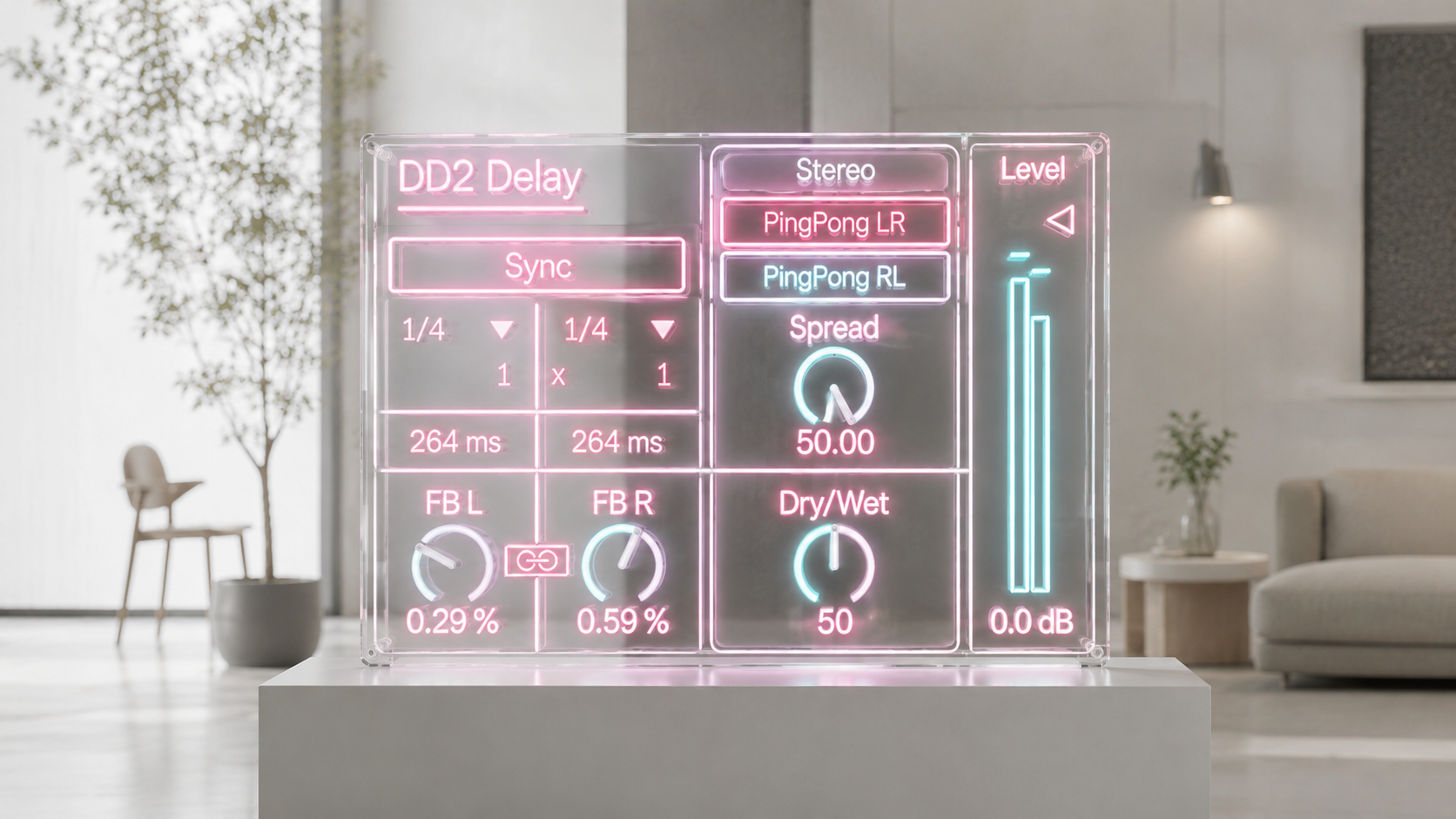
Built for Ableton Sessions Where Clean Delay Is Not Enough
Use DD2 Delay when the echo should have a surface.
On synth leads, it gives the phrase a narrow digital trail without washing out the front of the sound. On drums and breakbeats, it can add an older shadow behind hits, especially when a clean delay feels too glossy. On vocals, it can sit behind the phrase like a thin recorded double. On dub stabs and plucks, Feedback becomes a way to push the sound into darker repetitions. On pads and drones, Extended timing can turn the delay into a long degraded memory.
The device works best when the repeat is part of the sound design. A small amount can make a dry source feel as if it has passed through an older digital unit. A stronger setting can make the repeat become the main texture.
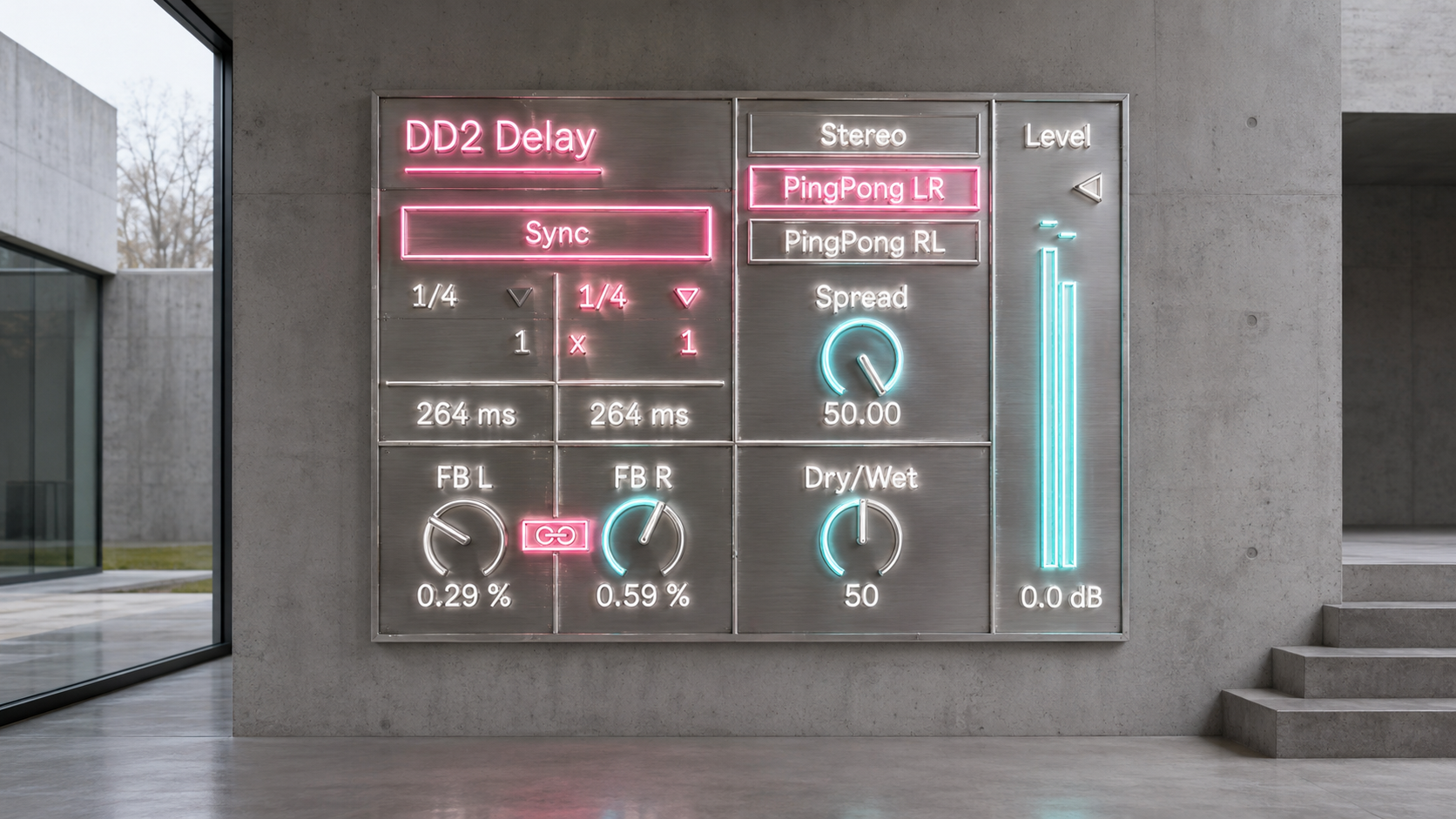
The Character Comes From the Signal Path
DD2 Delay is not presented as a fully measured hardware clone. It is a DD2 style physical modeling direction rebuilt for Max for Live.
The sound comes from several linked behaviors: bandwidth limiting, 12 bit style conversion, compander inspired motion, a clock style sample hold, resistor network DAC inspired imperfection, and feedback darkening.
These details are not included as decoration. They are the reason the repeat does not feel like a perfect copy.
DD2Delay2.0 also includes a tail continuity adjustment. The smallest final repeats close more naturally, so the echo is less likely to feel as if the end has been suddenly cut by the expander.
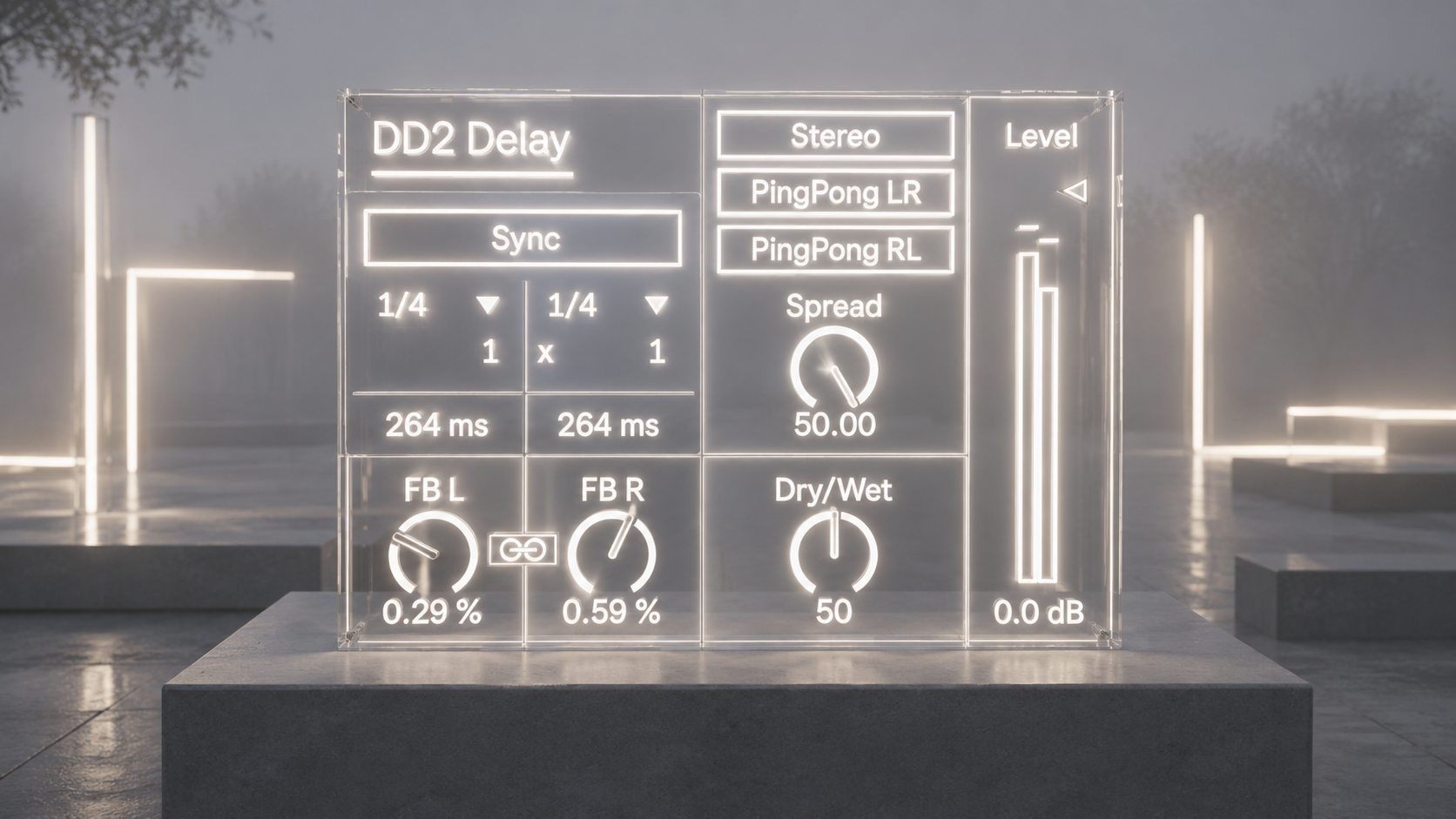
Stock Inspired Tone, Modern Extension Layer
The stock inspired layer and the Max for Live extension layer are kept separate.
Stereo operation and shorter timing ranges keep the device close to the tighter early digital delay feeling. Extended range and PingPong routing expand the device for modern production without pretending that those additions were part of the original hardware behavior.
This makes the device practical in Ableton while keeping the design honest: DD2 Delay is about the color of an early digital return, not a false claim of exact hardware duplication.
Practical Applications
Use it on a mono synth lead when the part needs a narrow digital trail.
Use it on drum hits when a clean delay sounds too polished.
Use it on vocal fragments when the repeat should sit behind the words instead of surrounding them.
Use it on dub chords when Feedback should darken the phrase over time.
Use it on return tracks when several sounds need to share the same older digital residue.
Use PingPong LR or PingPong RL when the echo needs movement across the stereo field while keeping the DD2 style texture.
Use Extended range when the delay should move beyond short hardware style timing and become a longer memory inside the session.
Availability and Licensing
DD2 Delay is prepared as an Ableton Max for Live device for Sellfy.
Existing license holders can access the latest version by logging in with the Sellfy account used for the original purchase. Updates are available at no additional cost through that account.
v.2.0 ... Improved ADDA simulation. (2026/5/27)
v.1.1 ... Improved overall circuit modeling fidelity. (2026/5/27)
Delay
2290 Delay https://akihikomatsumoto.sellfy.store/p/ableton-2290-delay/
REcho https://akihikomatsumoto.sellfy.store/p/abletonrecho
Analog Delay https://akihikomatsumoto.sellfy.store/p/abletonanalogdelay/
Bouncing Delay https://akihikomatsumoto.sellfy.store/p/abletonbouncingdelay
Shoegazer Reverse Gate https://akihikomatsumoto.sellfy.store/p/abletonshoegazerreversegate/
VDB Delay https://akihikomatsumoto.sellfy.store/p/abletonvdbdelay
Reverse Delay https://akihikomatsumoto.sellfy.store/p/abletonreversedelay/
Mod Delay https://akihikomatsumoto.sellfy.store/p/ableton-mod-delay/
D7 Tap Delay https://akihikomatsumoto.sellfy.store/p/ableton-d7-tap-delay/
Color Delay https://akihikomatsumoto.sellfy.store/p/abletoncolordelay/
Graneon https://akihikomatsumoto.sellfy.store/p/ableton-graneon/
DD-2 Delay https://akihikomatsumoto.sellfy.store/p/ableton-dd2-delay/
Akihiko Matsumoto
Study Site https://akihikomatsumoto.com/study/
Ableton M4L, Serum Preset Store https://akihikomatsumoto.com/download/
Sample Pack https://akihikomatsumoto.sellfy.store/sample-pack/
Bandcamp https://akihikomatsumoto.bandcamp.com
Ableton Skin https://akihikomatsumoto.sellfy.store/p/ableton-skin-pack/
Spotify https://open.spotify.com/artist/1tZMmxzZbvNu6klyKXa0L1?si=2JZaFeLbREi-UownD8POSg